
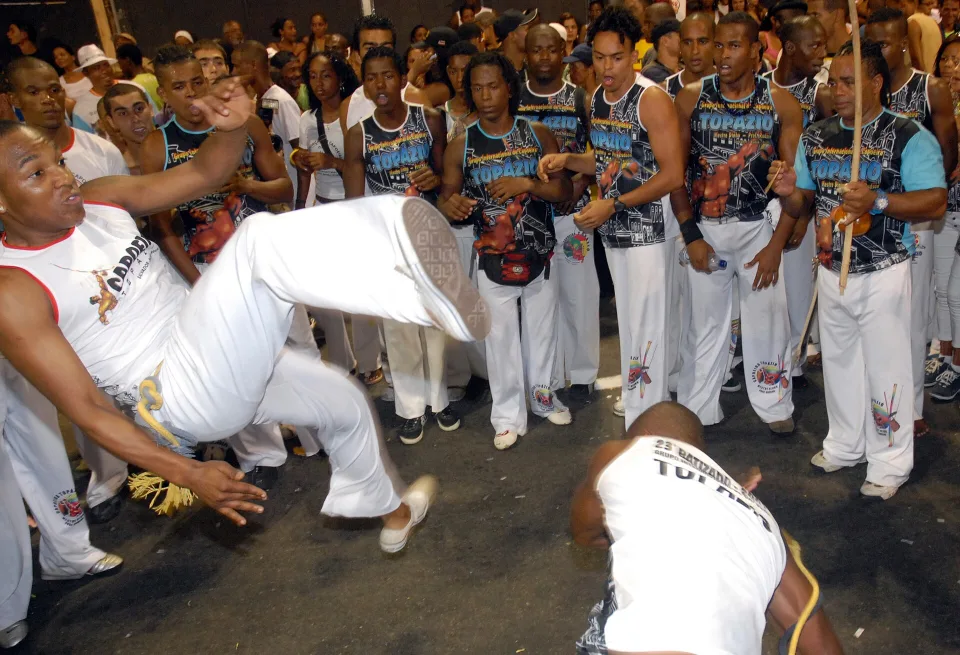
Start with diversity: there is no single Brazilian personality
Brazilian culture is shaped by Indigenous peoples, African diasporas, Portuguese colonisation and later migration from Europe, the Middle East, Asia and neighbouring countries. Those influences are not distributed evenly. Salvador, Belém, São Paulo, Porto Alegre, Manaus and Recife can feel very different even when the language and national symbols are shared.
Visit Brasil describes the country through that cultural diversity rather than one national stereotype, and that is the useful mindset for travellers. Samba, Carnival and football matter, but they are not a shortcut to understanding every Brazilian person or region.
Treat anything you read about “Brazilians always…” as a rough social clue at most. Age, class, religion, city versus countryside, work versus leisure and personal preference all matter more than a rulebook.
Observe first. If you are unsure how formal a greeting, dress code or social situation is, watch what local people are doing and match the setting rather than performing a stereotype.
Greetings: friendly, often informal, but context decides the distance
A verbal greeting matters. Bom dia in the morning, boa tarde in the afternoon and boa noite in the evening are useful with hotel staff, drivers, shopkeepers and people you meet. Add por favor and obrigado or obrigada and you already sound more considerate.
Among friends and family, hugs and cheek kisses are common in many parts of Brazil, but the number and style vary and not everyone wants physical contact. In business or first meetings, a handshake can still be the simpler choice. Let the other person set the level of familiarity.
Names are often used quickly and conversation can become personal faster than in some northern European cultures. That does not mean every question is intrusive or every friendly interaction is an invitation to a deeper relationship. Read tone and context.
Do not treat Spanish as “close enough Portuguese”
Portuguese is Brazil’s official language. Visit Brasil notes that English and Spanish are spoken by some people in tourist areas and major cities, but neither should be assumed, especially outside the most visited places.
Spanish speakers can often recognise written Portuguese, but pronunciation and everyday vocabulary create misunderstandings quickly. Start in Portuguese, keep sentences simple and use a translation app when needed. Our Portuguese for travellers guide gives you the phrases that are actually useful on the road.
If someone switches to English or Spanish to help you, great. If not, gestures, maps and patience are normal parts of travel. Raising your voice does not make another language easier to understand.
Dress for the setting: casual country, contextual rules
Daytime dress in many Brazilian cities is casual, and beach destinations are especially relaxed. But beachwear is not universal streetwear. Walking through a shopping centre, church, formal restaurant or government building in swimwear can feel out of place even when the beach is two blocks away.
Religious sites deserve special attention. The Ministry of Tourism recommends adapting clothing to the rules of temples and churches. When there is no posted dress code, shoulders and a reasonable level of coverage are the safest choice.
Nightlife varies from flip-flop casual to very polished. If a particular club or restaurant matters to you, check its own dress policy instead of assuming “Brazil is informal.”
Tipping: the 10% service charge is common, but check the bill
Visit Brasil says tips are not mandatory but are appreciated, and restaurants and bars commonly work around a 10% service amount where it is not already included. Many bills show a suggested service charge automatically, so read the total before adding another tip.
In taxis and ride-hailing, rounding up is appreciated but not expected as a fixed percentage. Hotels may receive small tips for extra service, but Brazil does not require the constant tipping rhythm familiar from some countries.
If service is poor or the charge is unclear, ask politely what is included. Our money in Brazil guide covers payment habits, cards, cash and Pix in more detail.
Photography and communities: ask when people are the subject
Public streets, architecture and landscapes are part of ordinary travel photography. The moment a specific person becomes the subject — a market seller, musician, child, religious participant or resident of a traditional community — asking first is the respectful default.
Do not treat Indigenous, quilombola, riverside or religious communities as open-air sets. Community visits should happen through legitimate local arrangements, with the rules of the host community taking priority over the visitor’s desire for photographs or “authentic experiences.”
The same principle applies in favelas. People live there; the neighbourhood is not a spectacle. If you visit, use a responsible local operator or host, follow local guidance and avoid photographing residents without consent.
Conversation: warmth is easy; assumptions about politics, race and wealth are not
Food, music, football, travel and regional identity can open conversations quickly. Brazilians often enjoy explaining local differences, and showing genuine curiosity is more useful than arriving with a list of things you already “know” about the country.
Politics, race, religion, inequality and crime are complex and personal topics. They are not forbidden, but tourists should listen before lecturing or turning someone’s daily reality into a debate exercise.
Humour can be fast and teasing among friends, yet joking about accents, poverty, favelas or ethnic identity as an outsider is a poor shortcut to familiarity. Friendly does not mean consequence-free.
Brazil culture and etiquette FAQ
Do Brazilians greet with a kiss?
Often among friends or in informal social settings, but the practice varies by region and person. Let the other person lead rather than assuming physical contact.
Is it rude to speak Spanish in Brazil?
It is not rude to use Spanish when it helps, but starting by assuming everyone understands it can be frustrating. Portuguese is the official language, and a few basic Portuguese phrases are appreciated.
How much should I tip in Brazil?
Around 10% is common in restaurants and bars, often already suggested or included on the bill. Check before adding another amount.
Can I wear beach clothes around the city?
Near beaches, casual clothing is normal, but swimwear can be inappropriate in churches, formal restaurants, shopping centres or other non-beach settings.
Is Brazil relaxed about punctuality?
Some private social events are flexible, but tours, transfers, flights, reservations and business appointments should be treated as real schedules.
Useful official culture references
Culture cannot be reduced to official rules, but these Brazilian tourism sources are useful for language, diversity, tipping and traveller etiquette.
- Visit Brasil — Culture — Official tourism overview of Brazil’s cultural diversity.
- Visit Brasil — Language — Portuguese, translation tools and communication advice.
- Visit Brasil — Taxes and tips — Current tourism guidance on service charges and tipping.
- Ministry of Tourism — traveller etiquette — Official advice on observing local customs, dress and punctuality.
Found an outdated price, route or detail? Send the page URL, the information that needs changing and a supporting source if available.
Report an error →