
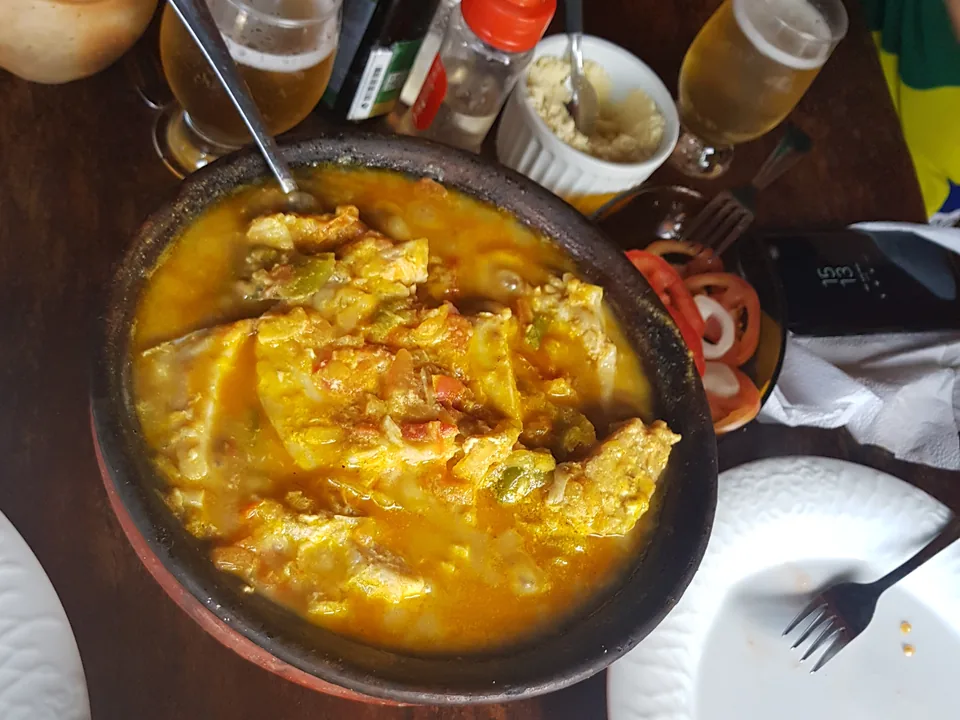
There is no single “Brazilian cuisine”
The useful way to understand food in Brazil is regional. A dish that feels completely ordinary in Salvador may be uncommon in southern Brazil; ingredients that define Amazonian cooking may barely appear on a menu in Rio. The official tourism board describes Brazilian gastronomy in exactly this broad way: Northeastern dishes such as moqueca and acarajé sit alongside southern barbecue and coastal fish traditions.
For a traveller, that is good news. Food becomes part of the route rather than a checklist. A city break in São Paulo gives you extraordinary restaurant variety and immigration-driven cooking. Salvador puts Afro-Brazilian food and dendê oil at the centre. Manaus introduces Amazonian fish, fruit and cassava-based preparations. Minas Gerais is famous for comforting, rural cooking and cheese. The coast naturally brings seafood into the picture.
If a menu is full of dishes you have never heard of, that is usually a better sign than a menu designed around the ten dishes every foreign visitor already knows.
The dishes worth knowing first
You could build a very long list, but these dishes and snacks give you a useful vocabulary for a first trip. They are not equally common everywhere, and that is part of the point.
Feijoada
A slow-cooked black-bean and meat stew, commonly served with rice, farofa, greens and orange. It is rich, filling and often associated with long lunches rather than a quick meal.
Moqueca
A fish or seafood stew with regional versions. Bahian moqueca is known for ingredients such as dendê oil and coconut milk; Espírito Santo has its own distinct capixaba tradition.
Acarajé
A black-eyed-pea fritter fried in dendê oil, split and filled with accompaniments such as vatapá, shrimp and salad. It is strongly connected to Afro-Bahian culture.
Pão de queijo
Small cheese breads made with cassava starch. Breakfast, snack, airport food, café companion — it is one of the easiest things to fall into the habit of ordering.
Coxinha
A teardrop-shaped fried snack traditionally filled with shredded chicken. Best when bought fresh from a busy bakery, snack bar or market counter.
Tapioca
A cassava-starch crêpe cooked on a hot plate and filled sweet or savoury. Common at breakfast, markets and street stalls, especially in the Northeast.
Churrasco
Brazilian barbecue has strong southern roots. A churrascaria can be an event in itself, but local barbecue culture is broader than the all-you-can-eat format known abroad.
Amazonian fish & fruit
Pirarucu, tambaqui, tucupi, jambu, cupuaçu and açaí show how different the North can taste. In the Amazon, choose restaurants that work with genuinely local ingredients.
Where the food changes most
A good food route does not need to cover the whole country. It just needs contrast. These are some of the clearest culinary personalities within the destinations already covered by Brasilll.
Salvador & Bahia
Dendê oil, coconut milk, seafood, acarajé, vatapá and moqueca are central references. Food here is inseparable from history, religion and Afro-Brazilian identity.
Explore Salvador →São Paulo
One of the best choices if you want Brazilian regional cuisines and international food in the same trip. The city rewards curiosity more than a fixed must-eat list.
Explore São Paulo →Manaus & the Amazon
Fish, cassava, tropical fruit and ingredients rarely seen in Europe make the North the strongest culinary contrast on a first Brazil trip.
Explore Manaus & Amazon →Recife, Olinda & Fortaleza
Seafood, tapioca, couscous, carne de sol, crab and regional sweets are easy to encounter in everyday restaurants and markets.
How everyday eating works
Some of the most useful words are not dishes at all. They describe the kind of place you are walking into. A restaurante por quilo or self-service lets you build a plate from a buffet and pay by weight. This is excellent for travellers because you can see the food, try several things and eat as lightly or heavily as you want.
A prato feito or PF is a straightforward set plate, often based around rice, beans, salad and a protein. A lanchonete is a casual snack bar where juices, sandwiches, salgados and quick meals are common. A padaria can be much more than a bakery: in larger cities it may function as breakfast spot, snack counter, café and casual restaurant.
- Lunch is important. If you want the full range at a kilo restaurant, arrive during normal lunch hours rather than late afternoon.
- Fresh juice is everywhere. Brazil is a good place to order fruit juices you rarely see at home.
- Coffee is often small and strong. A cafezinho is part drink, part social punctuation.
- Service charge: restaurants commonly suggest around 10% service, sometimes already shown on the bill; it is not a hidden tax.
Vegetarian food, allergies and spice
Vegetarian and vegan eating is straightforward in major cities, but traditional dishes can contain meat stock, bacon, dried meat or shrimp even when the dish looks vegetable-based. At buffet restaurants you have much more visual control, although cross-contact may still matter for serious allergies.
Brazilian food is not automatically very spicy. Hot pepper sauces may be served separately, and Bahia is more associated with heat than many other regions. If you have a severe allergy, carry the exact explanation in Portuguese on your phone and show it rather than relying only on spoken English.
Tenho alergia grave a... means “I have a severe allergy to...” Add the ingredient in Portuguese and confirm whether the kitchen can avoid cross-contact.
What to drink
Fresh fruit juice may be the most consistently rewarding everyday drink: maracujá, acerola, caju, graviola and cupuaçu are worth trying when available. Guaraná soft drink is ubiquitous. Coffee culture varies by place, from quick cafezinhos to specialist cafés in major cities and coffee-producing regions.
The best-known alcoholic drink is the caipirinha, traditionally made with cachaça, lime, sugar and ice. In hot climates it is deceptively easy to drink quickly, so pair it with food and water — especially during Carnival or long beach days.
How to eat better on your trip
The biggest mistake is to research a fixed list of “Brazilian foods” and then order the same things in every city. Use the list only as a starting point. Once you arrive, look at what people around you are actually eating, ask what the house is known for and visit at least one market or ordinary lunch place.
For Brasilll, food is also a destination filter. If gastronomy is one of your strongest travel motivations, São Paulo, Salvador and the Amazon offer three completely different reasons to travel — cosmopolitan range, Afro-Bahian identity and Amazonian ingredients. That is more useful than asking which one has the “best food.”
Brazilian food FAQ
Is Brazilian food spicy?
Not generally. Some regional cooking, especially in Bahia, uses more chilli, but many dishes are mild and hot sauce is often added separately.
What is the best dish to try first?
There is no universal answer. Feijoada is a useful classic, but if you are in Salvador choose Bahian food; in the Amazon try local fish and ingredients; in Minas Gerais look for mineiro cooking.
Are vegetarian options easy to find?
In large cities, yes. Buffet-by-weight restaurants are particularly convenient. Traditional recipes may still use meat, stock or shrimp, so ask if that matters to you.
Do restaurants expect tips in Brazil?
A service charge of around 10% is common in restaurants and bars and may already appear on the bill. Visit Brasil notes that tips are not mandatory but are appreciated.
Sources & further reading
Culinary traditions are broad and regional. These official tourism sources are useful starting points for current destination context.
- Visit Brasil — Gastronomy — Official overview of Brazil as a gastronomic destination.
- Visit Brasil — Bahian cooking — Context on moqueca, acarajé, dendê and Afro-Bahian influences.
- Visit Brasil — Taxes and tips — Current official visitor guidance on service and tipping.
Found an outdated price, route or detail? Send the page URL, the information that needs changing and a supporting source if available.
Report an error →