
First question: do you actually need a car?
In Rio de Janeiro, São Paulo, Salvador and other major cities, a rental car often creates more problems than freedom: traffic, parking, unfamiliar lanes and the need to protect a vehicle while you are sightseeing. Metro, ride-hailing, taxis and organised transfers are usually easier for the urban part of a trip.
A car becomes valuable when the attraction is the space between destinations: mountain towns, winery routes, rural pousadas, beaches outside public-transport corridors, national-park gateways and small historic towns.
For a first Brazil trip, a hybrid itinerary is often best: fly between major regions, then rent a car for two to five days where it unlocks the area. Pair this with our flying in Brazil guide rather than forcing every kilometre onto the road.
Measure a driving day in realistic door-to-door hours, not map kilometres. Brazil is huge, traffic can be slow around cities, and night driving is rarely worth saving one hotel night.
Where road trips work especially well
Some Brazilian regions naturally reward having your own wheels. The point is not to drive the whole country; it is to connect places that sit relatively close together but are awkward by public transport.
Serra Gaúcha and Santa Catarina
Wine country, Gramado and Canela, mountain roads and coastal stops are easier to combine with a car.
Historic Minas Gerais
Ouro Preto, Mariana, Tiradentes and smaller towns can form a strong regional circuit, although mountain roads require realistic timing.
Selected beach corridors
A car helps where beaches and pousadas are spread between towns, provided parking and road conditions are checked in advance.
Park gateways and rural stays
For some chapadas, waterfalls and countryside lodges, a car gives flexibility — but local guides or 4x4 transfers may still be required beyond the paved road.
Foreign driving licence and IDP: check the current 180-day rule
Brazil’s Senatran updated its foreign-licence guidance under Contran Resolution No. 1,020 of 1 December 2025. An eligible driver licensed abroad can drive in Brazil for up to 180 days when covered by the relevant international convention or agreement.
Senatran says the driver should carry a valid foreign driving licence, identification, proof of the date of entry into Brazil and, for documents issued by a contracting party to the 1968 Vienna Convention on Road Traffic, an International Driving Permit (IDP) together with the foreign licence.
Rental companies can impose their own age, licence-age and credit-card requirements beyond the legal minimum. Check the exact company before booking rather than assuming a third-party comparison site has captured every condition.
Do not use an IDP as a substitute for your original licence. It accompanies the underlying licence where required.
Renting the car: insurance, deposit, second drivers and damage photos
The cheapest headline price is not necessarily the cheapest rental. Compare what the rate includes: collision cover, theft protection, third-party liability, deductible, mileage, one-way fees, airport surcharges, additional drivers and toll administration.
Ask how the security deposit is blocked and which credit card must be in the main driver’s name. Debit cards, virtual cards and prepaid cards may not meet the company’s deposit rules even when they work for the online booking.
At pickup, photograph the entire car, wheels, windscreen, fuel level and dashboard mileage before leaving. Make sure existing damage is recorded. At return, keep fuel and inspection receipts or photos until the deposit is released.
If the rental includes a toll tag, ask whether the company charges only tolls or also a daily/tag administration fee. That matters on multi-day motorway routes.
Road conditions and driving style: plan for variation
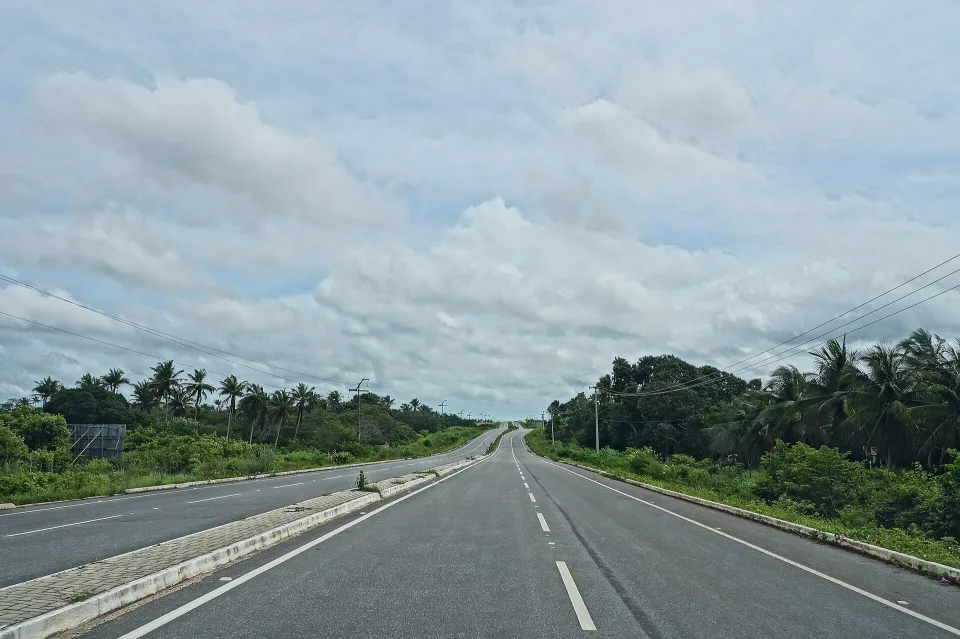
Brazilian roads range from excellent concession motorways to rough local roads and long stretches where services are sparse. Road quality can change between states and after heavy rain, so the route matters more than the road number alone.
The Federal Highway Police advises drivers to check distance, weather, fuel and food stops before travel and to plan rest breaks. Their guidance recommends a break roughly every three hours rather than turning a holiday into an endurance drive.
Use seat belts for every occupant. Follow posted speed limits rather than relying on a general national maximum; enforcement includes fixed and mobile cameras. Avoid alcohol entirely when you are driving.
Daytime driving is usually the easier choice for visitors. Darkness makes potholes, animals, pedestrians, motorcycles and unfamiliar junctions harder to read, while services become less predictable.
Tolls and Free Flow: ask the rental company before you pass a gantry
Brazil has many concession roads with traditional toll plazas, especially around major corridors. Increasingly, some federal concessions also use Free Flow, where there is no barrier: cameras and sensors identify a tag or licence plate while the car keeps moving.
ANTT says a vehicle with a compatible tag is charged automatically. Without a tag, payment is made through the concessionaire’s digital channels. The current system has expanded across several federal corridors and continues to evolve, so road-specific checks matter.
With a rental vehicle, do not assume you should independently pay a plate-based toll without asking. The rental company may have its own tag, account and administration process. Ask at pickup: “How are tolls and free-flow charges billed on this car?” and keep the answer in writing if possible.
The practical risk is not the toll itself but a missed electronic charge that later becomes an administration problem. Clarifying the process before driving is far easier than solving it after returning the car.
Parking and vehicle security: make the car look empty
Do not leave luggage, phones, cameras or shopping visible inside a parked car. On transfer days, go directly from hotel to the next accommodation where possible instead of leaving a fully loaded vehicle at a beach or urban attraction.
Use formal parking when the alternative is an unfamiliar street, especially overnight. Hotels and pousadas can tell you what is normal locally.
If you are parking in a city, check signs carefully. Local parking systems can be digital or time-limited, and towing or fines are a poor way to learn municipal rules.
For general street awareness, read our Brazil safety guide. A rental car changes your risks; it does not eliminate them.
Build a realistic road-trip day
A good road-trip day leaves time for stops, traffic and the destination itself. If a map says four hours, turning it into eight hours of sightseeing plus dinner may be optimistic once you add fuel, coffee, roadworks and the last 30 kilometres into town.
Avoid stacking a long drive and a non-refundable flight on the same day. Return the car near the airport the evening before or leave a generous margin. Separate rental returns, shuttles and terminal access can consume more time than expected.
If your overall trip is only seven to fourteen days, use the Brazil itineraries guide to decide which region deserves road time and which transfer should remain a flight.
Brazil road trip and rental-car FAQ
Can tourists drive in Brazil with a foreign licence?
Eligible foreign drivers can currently drive for up to 180 days under Senatran’s rules when covered by applicable international agreements. Carry the required original documents and an IDP where the Vienna Convention rules apply.
Do I need an International Driving Permit in Brazil?
Current Senatran guidance says an IDP should accompany the foreign licence for documents issued by a contracting party to the 1968 Vienna Convention. Check the rule for your issuing country and your rental company.
Are there toll roads in Brazil?
Yes. There are traditional toll plazas and expanding electronic Free Flow systems on some concession roads. With a rental car, ask how the company handles both before driving.
Is it a good idea to rent a car in Rio or São Paulo?
Usually not for ordinary city sightseeing. Traffic and parking reduce the benefit. A regional rental after leaving the city often makes more sense.
Should I drive at night?
Daytime is generally easier for visitors because road surfaces, pedestrians, animals, junctions and services are more visible and predictable.
Official driving and toll references
Driving-document and toll rules can change. These are the Brazilian official sources to re-check close to your trip.
- Senatran — international driving licence guidance — Current foreign-licence documents and 180-day rule under Resolution 1,020/2025.
- Federal Highway Police — travel guidance — Route planning, vehicle checks, fuel and rest advice.
- ANTT — Free Flow — Current electronic toll locations and system information.
- ANTT — how Free Flow charging works — Tag and number-plate charging process.
Found an outdated price, route or detail? Send the page URL, the information that needs changing and a supporting source if available.
Report an error →