
Why domestic flights are part of normal Brazil travel
Brazil’s distances are the first thing many European visitors underestimate. Rio to Foz do Iguaçu, Salvador to Rio, São Paulo to Manaus or Brasília to the Northeast are journeys where flying can save a day or more compared with ground transport.
LATAM, GOL and Azul are the three names most visitors see when comparing domestic routes, with networks that change by season and airport. Do not build an itinerary around the assumption that a direct flight you saw six months ago will still operate on your exact date.
Use our 7, 10 and 14-day Brazil itineraries to decide which flights are actually worth adding. A flight should connect meaningful parts of the trip, not create another destination just because the fare looked cheap.
The airport code can matter as much as the city name
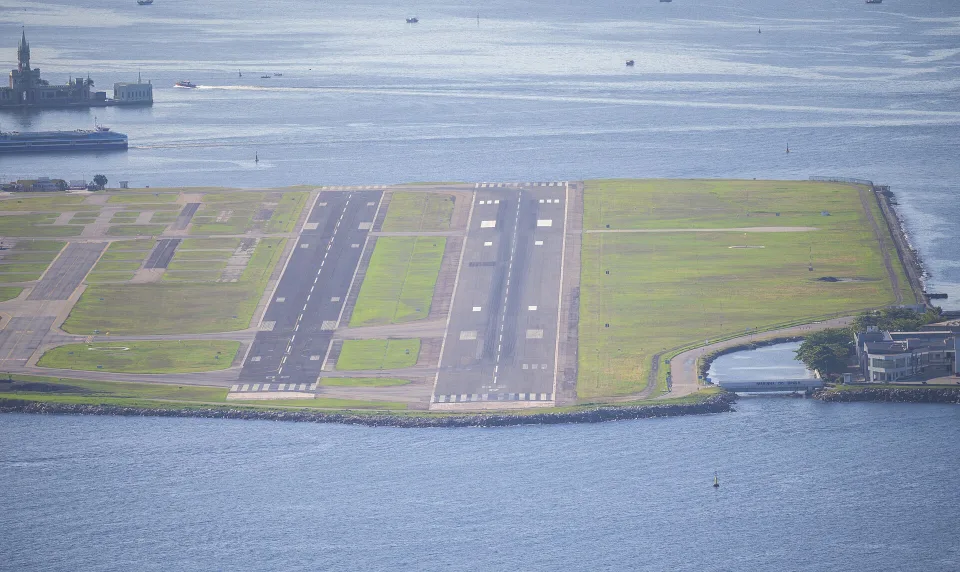
Rio de Janeiro: Galeão (GIG) handles international and domestic services, while Santos Dumont (SDU) is a compact city airport close to Centro and the South Zone. A domestic ticket to “Rio” is not automatically the same journey on the ground.
São Paulo: Guarulhos (GRU) is the major international gateway, Congonhas (CGH) is much closer to central São Paulo and heavily domestic, and Viracopos (VCP) is in Campinas. A connection that requires changing between them is a real road transfer, not an airport-terminal change.
The same principle applies elsewhere: check the three-letter airport code, the distance to your accommodation and the transfer at the time of day you will actually travel. Saving R$100 on the fare can be a bad trade if it adds a long taxi and two hours of uncertainty.
Search the airport code on a map. If your itinerary says GRU → CGH or GIG → SDU, you are changing airports and need enough road-transfer time.
Book direct when it protects something important
A single booking gives you more protection when a connection is disrupted because the airline has sold the itinerary as one journey. Separate tickets can be perfectly reasonable, but the risk sits differently: if flight one is late and flight two belongs to another booking, you may have to solve and pay for the missed onward trip yourself.
This matters most before an international departure, a fixed lodge transfer or an expensive boat departure. Add a generous buffer or, where practical, sleep in the departure city the night before. Brazil has enough moving parts that a final calm evening is often more valuable than squeezing in one more sight.
For domestic point-to-point flights, compare total price, schedule and airport. Midday flights can sometimes be worth paying slightly more for because they avoid a 04:30 hotel departure or an arrival after public transport has stopped being convenient.
Baggage: the cheapest fare is not always the cheapest trip
Brazilian airlines can sell different fare families with different checked-baggage allowances. ANAC’s consumer guidance states that cabin baggage must include at least 10 kg without an additional charge, while airlines set the permitted dimensions and number of pieces. Always check the airline’s current conditions because aircraft and fare rules differ.
Checked baggage is where price comparisons often change. If one traveller needs a 23 kg case, add that cost before deciding which fare is cheapest. If you are taking several domestic flights, a smaller bag can save both money and time.
Keep medicines, documents, electronics, chargers and at least one change of clothes in cabin baggage. If checked luggage is delayed, that small decision can keep the first day of a short stop intact. Our Brazil packing guide is designed around the same domestic-flight reality.
What a domestic airport day feels like
For a straightforward domestic flight, the process is familiar: check in online where possible, arrive with time for security and baggage drop, and have the identification required by the airline. International visitors should travel with an accepted original identification document rather than assuming a photo of a passport will always be enough for boarding.
Large airports such as GRU and GIG require more walking and buffer than compact airports such as SDU. Holiday periods, Carnival, Christmas/New Year and school holidays can also change queues dramatically.
Do not rely on the gate printed hours earlier. Check the airport screens and airline app, especially after a delay or aircraft change. Keep mobile data working so notifications reach you; the SIM and eSIM guide explains the easiest options for visitors.
Delays and cancellations: know that ANAC rules exist
Brazilian civil aviation is regulated by ANAC. Current passenger rules cover information during disruption, rebooking or reimbursement options and material assistance depending on the circumstances and waiting time. The exact remedy depends on what happened, so use ANAC’s current passenger guidance rather than an old travel-blog screenshot.
If a flight changes, keep the boarding pass, booking confirmation and receipts for reasonable expenses you may later need to document. Speak to the airline while you are still at the airport when the problem is active.
Weather can affect operations even when your own airport looks clear because aircraft and crews rotate through a national network. Summer storms around major southeastern airports are one reason not to build a fragile chain of separate tickets.
Use flights to simplify Brazil, not to collect airports
The best internal flight is often the one that replaces a huge overland transfer. Rio → Foz, Rio → Salvador or São Paulo → Manaus can transform what is realistic in a short holiday.
The worst internal flight is one that gives you a single night somewhere before another airport day. Count from hotel checkout to the moment you are settled in the next accommodation; a “two-hour flight” can easily consume six hours of usable travel time.
When two places are genuinely close, ground transport can be better. Rio → Paraty, Salvador → Praia do Forte and Recife → Porto de Galinhas are examples where the route makes more sense on the road than in the air.
Compare the whole travel day, not just the flight
Illustrative planning example in one time zone, not a live itinerary: leaving the hotel at 08:00, reaching the airport at 09:00, flying from 11:00 to 13:00 and arriving at the next hotel at 14:30 uses six and a half hours. A two-hour flight has taken most of the useful middle of the day. Check local time zones when reading an actual ticket.
Before choosing the cheaper ticket
| Item | Check on the booking |
|---|---|
| Airport | The exact airport code at both ends, including any airport change during a connection. |
| Baggage | Included cabin and checked baggage, plus the fare conditions for each airline. |
| Tickets | Whether the connection is protected on one booking or involves separate reservations. |
| Transfers | The hotel-to-airport and airport-to-hotel journeys, not just time in the air. |
| Arrival | Whether check-in, a lodge transfer or the final boat still works at the expected arrival time. |
Swipe or scroll sideways to see every column.
Do not treat the scheduled landing time as the time you can start a boat trip or guided excursion. Add baggage, exit and local transfer time, and ask the provider what happens if the flight is delayed.
Flying in Brazil FAQ
What are the main domestic airlines in Brazil?
LATAM, GOL and Azul are the three major names most visitors encounter. Routes and frequencies change, so compare your exact dates rather than assuming a route is daily.
Is checked baggage included on Brazilian domestic flights?
Not necessarily. Fare families can differ, so check the exact baggage inclusion before comparing prices. Cabin baggage rules are also subject to airline size limits.
Can I connect between GRU and CGH in São Paulo?
Yes, but they are separate airports with a road transfer between them. Treat it as a self-transfer and leave a generous buffer.
Which Rio airport is better: GIG or SDU?
It depends on the route. SDU is very central and convenient for many domestic trips; GIG has broader international and domestic connectivity. Compare the whole journey.
How much time should I leave between separate tickets?
There is no single safe number because airport, baggage, immigration and traffic matter. For a high-value international departure, a same-day tight self-transfer is poor risk management; an overnight buffer can be sensible.
Official flight information
Airline products and schedules change frequently. These official ANAC resources are the reference point for current passenger rules in Brazil.
- ANAC — Viagem Dez — Consumer guidance on fares, baggage, refunds and air-travel rules.
- ANAC — Passenger rights and duties — Official regulatory material covering Brazilian air passengers.
Found an outdated price, route or detail? Send the page URL, the information that needs changing and a supporting source if available.
Report an error →