
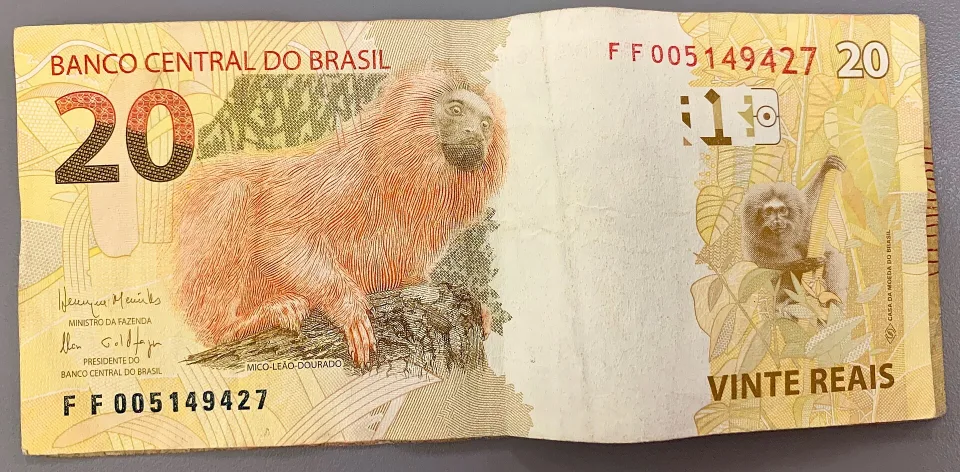
The Brazilian real is the currency you actually use
Brazil’s currency is the real, plural reais, shown as R$. Banco Central do Brasil states that the real is the currency accepted in Brazil and advises travellers exchanging foreign cash to use institutions authorised to operate in the foreign-exchange market.
In major cities and tourist areas you will rarely need to arrive with a large amount of cash. Cards are deeply embedded in everyday Brazilian life, from restaurants and supermarkets to many kiosks and small shops. Still, having a modest cash reserve is useful for places where connectivity fails, small independent vendors, tips, local transport or nature destinations.
Do not assume euros or US dollars will function as day-to-day payment simply because you are in a tourist area. If a business offers to accept foreign currency, you are accepting that business’s exchange rate rather than the normal Brazilian payment system.
Use cards for most spending, keep a modest amount of reais as backup, and avoid carrying large quantities of cash around.
International cards are usually the easiest option
Banco Central’s guidance for people travelling to Brazil says international cards are widely accepted. In practice, Visa and Mastercard networks are common, and contactless payment is normal in many urban businesses. Acceptance can become less predictable in remote areas, on small tours or where mobile data is weak.
Before travelling, check your own bank’s foreign transaction fee, exchange-rate policy and ATM charges. Two travellers using the same restaurant terminal can pay very different final euro amounts depending on their card issuer.
Brazilian terminals may ask whether a payment is debit or credit. Foreign cards often work through the credit option even when the card deducts funds directly from your account. If one route fails, ask the merchant rather than repeatedly trying different PINs.
Keep sight of your card and verify the amount shown on the terminal before confirming. This is both a money habit and a safety habit, particularly in busy tourist areas.
Cash is backup, not the default — and ATMs deserve attention
Cash still matters. Visit Brasil even notes that some tours around Alter do Chão require cash, which is a useful reminder that Brazil’s payment infrastructure is not identical everywhere. Nature lodges, river communities, beach vendors and small local businesses can have different payment realities from São Paulo or Rio.
When you need reais, withdrawing from a bank ATM can be more convenient than carrying foreign cash from Europe. Banco Central confirms that international cards can be used to withdraw reais, but the ATM operator and your own bank may both apply limits or fees.
Prefer ATMs inside banks, airports, shopping centres or other controlled locations. Do not accept help from strangers at the machine, cover the keypad and avoid withdrawing a conspicuously large amount. If an ATM looks modified or behaves strangely, cancel the transaction and use another one.
Pix is everywhere — but most short-term tourists should not depend on it
Pix is Brazil’s instant payment system and has become part of everyday life. You will see Pix QR codes in shops, restaurants, markets and between individuals. That visibility can make visitors assume they can simply download an app and start paying. It does not work that way.
Banco Central says Pix can be used by a person or business that has a current account, savings account or prepaid payment account at an institution participating in Pix. Pix is accessed through that financial institution; it is not a standalone tourist wallet.
Foreigners, including non-residents, can obtain a Brazilian CPF. However, a CPF alone does not give you Pix access. You still need an eligible financial account and the institution must accept and onboard you. Rules and fintech products change, so a visitor who already has legitimate Brazilian banking access may be able to use Pix, but a normal short holiday should not be planned around getting it.
The practical answer is simple: if you already have working Pix through a participating institution, it is extremely useful. If you do not, bring a good international card and a cash fallback instead of creating extra bureaucracy just to imitate local payment habits.
Having a CPF and seeing a Pix QR code does not mean you can pay it. The essential requirement is access to an eligible account at a participating institution.
The famous 10% service charge is optional
Many Brazilian restaurants add or suggest a service charge, commonly 10%. This often appears directly on the bill, which can look mandatory to a visitor.
Brazilian consumer-protection guidance is clear: the service charge is a gratuity and its payment is optional. Procon-SP’s current consumer material describes 10% as the usual suggested percentage but states that the customer can pay more, less or refuse it according to the service received.
In ordinary situations, most diners who are satisfied simply pay the suggested service amount. You do not normally need to add a second North American-style 15–20% tip on top. If service has been poor or you do not wish to pay the suggested amount, you can ask for it to be removed or changed.
For guides, drivers, hotel staff and other personal services there is no single national tourist formula. Tip when the service feels genuinely personal or helpful rather than treating every interaction as a compulsory percentage.
A simple money setup for a Brazil trip
You do not need a complicated payment strategy. The strongest setup is redundancy: one primary international card, one separate backup card, some reais and access to your bank app in case you need to freeze a card or confirm a transaction.
Keep the backup card separate from your everyday wallet. Avoid carrying your passport, all your cards and all your cash together. When visiting a beach or going out at night, take only what you realistically need.
If your route includes remote Amazonia, Pantanal lodges, islands or small beach communities, ask accommodation or tour providers about payment before arrival. A place may technically accept cards but lose connectivity, or may require part of a tour payment in cash.
- Primary card with reasonable foreign-use fees.
- Second card stored separately.
- A modest amount of reais for backup and small payments.
- Bank app and card-freeze access protected by a strong device lock.
- Pix only when you already have legitimate access through a participating institution.
Check the bill before you tap: a worked example
Illustrative arithmetic, not a restaurant-price quote: a R$60 meal plus an optional 10% service charge totals R$66. If you accept that service charge and split the bill equally between two people, each share is R$33. Check whether the service is already included before adding another tip.
Three checks at the point of payment
| Check | What to do |
|---|---|
| Amount | Compare the terminal total with the bill, including any agreed service charge. |
| Currency | Check whether the terminal is charging in reais or offering a conversion into your home currency. Read the displayed terms before choosing. |
| Confirmation | Check for a receipt or transaction status before retrying a payment that appears to have failed. |
Swipe or scroll sideways to see every column.
Before paying a deposit, ask what is included, how the balance can be paid, what cancellation terms apply and who will issue the confirmation. Keep a copy available offline.
Money in Brazil FAQ
Can I pay with euros or US dollars in Brazil?
Do not rely on it. The Brazilian real is the normal currency for payments. Exchange foreign cash through an authorised institution or use an international card.
Are international cards accepted in Brazil?
Yes. Banco Central says international cards are widely accepted, including for withdrawing reais from ATMs. Keep some cash for remote areas and payment outages.
Can tourists use Pix in Brazil?
Only if they have access to an eligible account at a financial institution participating in Pix. A CPF alone is not enough. Most short-term visitors should plan around cards and cash instead.
Is the 10% service charge mandatory in Brazilian restaurants?
No. Consumer-protection guidance treats it as an optional gratuity. Ten percent is a common suggestion, and customers can accept it, change it or decline it.
How much cash should I carry?
Enough for small purchases and a backup rather than your whole travel budget. The exact amount depends on whether you are staying in major cities or travelling to remote areas.
Sources & further reading
Payment systems change quickly, so this guide uses current official Brazilian banking and consumer-protection sources and is reviewed frequently.
- Banco Central do Brasil — Traveling to Brazil — Official guidance on reais, authorised exchange and international-card acceptance.
- Banco Central do Brasil — Pix FAQ — Official explanation of who can make Pix payments and how the system is accessed.
- Receita Federal — CPF registration — Official confirmation that foreigners, including non-residents, can register for a CPF.
- Procon-SP — Consumer guidance — Consumer guidance explaining that restaurant service charge is optional and commonly suggested at 10%.
Found an outdated price, route or detail? Send the page URL, the information that needs changing and a supporting source if available.
Report an error →