
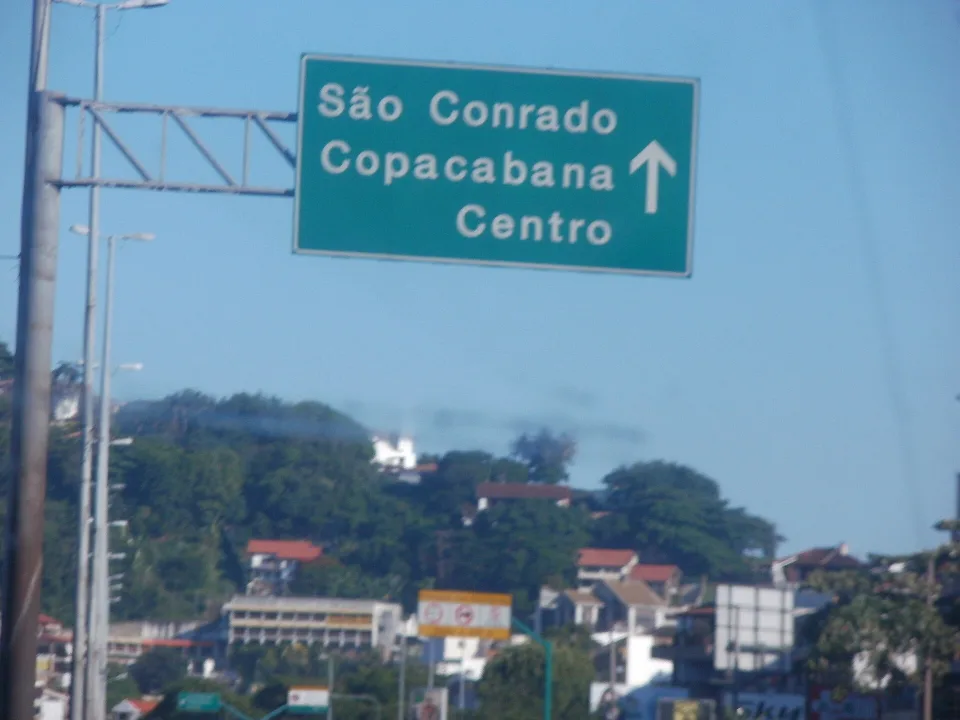
The language reality: Portuguese first, English and Spanish sometimes
Portuguese is Brazil’s official language. Visit Brasil notes that English and Spanish are spoken by some people in tourist areas and major cities, but that becomes less reliable as you move into ordinary neighbourhoods, smaller towns and remote destinations.
You do not need to be embarrassed about using a translation app. The goal is communication, not a language exam. Download offline Portuguese and save the names and addresses of hotels, bus terminals and destinations so you can show them even without mobile data.
A few Portuguese words also change the tone of the interaction. Even when the rest happens through English, Spanish, gestures or a phone screen, starting with bom dia or boa tarde shows effort.
Do not open with “Do you speak English?” from across the room. Greet the person first, then ask: “Você fala inglês?” or simply explain slowly what you need.
Pronunciation shortcuts: aim to be understood, not to sound native
Brazilian Portuguese pronunciation varies by region, so there is no single accent you need to imitate. For travel, clarity matters more than perfection.
A few patterns help: ão is a nasal sound as in não; final o often sounds closer to “oo”; final e often sounds closer to “ee” in many accents; and lh is similar to the sound in “million.” The letter r can change dramatically by position and region, so do not obsess over it.
Speak slightly slower than normal, separate key words and listen for numbers carefully. Prices, platform numbers and times are where a small misunderstanding becomes a practical problem.
The first ten phrases to learn
These are the phrases that make the rest of the trip easier. Learn them before specialist vocabulary.
Bom dia / Boa tarde / Boa noite
Good morning / good afternoon / good evening. Use them constantly.
Por favor
Please. Simple, universal and worth using.
Obrigado / Obrigada
Use obrigado if you identify as male and obrigada if you identify as female.
Com licença
Useful when passing, interrupting or asking for attention politely.
Desculpa / Desculpe
A quick apology or polite way to get someone’s attention.
Sim / Não
Basic, but learn the nasal sound in não.
Não entendo
Signals clearly that the problem is language, not unwillingness.
Pode repetir?
Can you repeat? Add mais devagar for “more slowly.”
Onde fica…?
Where is…? Add the place name: banheiro, metrô, hotel, aeroporto.
Quanto custa?
How much does it cost? One of the most useful shopping and transport questions.
Restaurants, cafés and food
Menus in tourist areas may be translated, but not always well. These phrases cover ordering, allergies and payment without learning every ingredient in Brazilian cuisine.
- Uma mesa para dois, por favor. — A table for two, please.
- Eu gostaria de… — I would like…
- Sem carne / sem peixe / sem leite. — Without meat / fish / milk.
- Tenho alergia a… — I am allergic to… Use a written translation for serious allergies.
- Água sem gás / com gás. — Still / sparkling water.
- A conta, por favor. — The bill, please.
- Aceita cartão? — Do you accept card?
- O serviço está incluído? — Is service included?
Transport, airports and directions
Transport language becomes easier when you build around destination, time and platform rather than complete sentences. Show the place name on your phone if pronunciation is difficult.
Our flying in Brazil guide explains the practical airport side; these are the words that help once you are there.
- Quero ir para… — I want to go to…
- Quanto tempo demora? — How long does it take?
- Que horas sai? — What time does it leave?
- Onde é o embarque? — Where is boarding?
- Qual é a plataforma? — Which platform?
- Este ônibus vai para…? — Does this bus go to…?
- Pode parar aqui? — Can you stop here?
- Aeroporto / rodoviária / metrô / estação. — Airport / bus terminal / metro / station.
Hotels, shopping and everyday problems
For hotels, the most useful vocabulary is often about what is missing or not working. Be direct but polite.
- Tenho uma reserva. — I have a reservation.
- Meu nome é… — My name is…
- O Wi-Fi não está funcionando. — The Wi-Fi is not working.
- Não tem água quente. — There is no hot water.
- Posso deixar a bagagem aqui? — Can I leave the luggage here?
- Tem um tamanho maior / menor? — Do you have a bigger / smaller size?
- Posso experimentar? — Can I try it on?
- Preciso de ajuda. — I need help.
Health and emergencies: keep these phrases saved offline
In a real emergency, use your phone, hotel staff or another person to help communicate. Do not rely on memory for medical detail. Save key conditions, medicines and allergies in Portuguese before the trip.
Brazil’s general emergency numbers are covered in our Brazil safety guide; language phrases are only one part of being prepared.
- É uma emergência. — It is an emergency.
- Preciso de um médico. — I need a doctor.
- Chame uma ambulância. — Call an ambulance.
- Perdi meu passaporte. — I lost my passport.
- Fui roubado / roubada. — I was robbed.
- Onde fica a delegacia? — Where is the police station?
- Eu tomo este medicamento. — I take this medication.
- Tenho alergia a… — I am allergic to…
For Spanish speakers: similarity helps, but “portunhol” has traps
Spanish speakers have a head start with reading, but it can create overconfidence. Brazilian Portuguese pronunciation is different enough that a sentence that looks obvious on paper may not sound obvious at all.
Some everyday false friends matter: pasta can mean folder rather than food; apelido means nickname, not surname; oficina commonly means workshop or repair shop, not office; and embaraçada means embarrassed or tangled, not pregnant.
The best strategy is not to imitate Portuguese by changing Spanish endings. Use a few real Portuguese phrases clearly, then switch to slow Spanish only if the other person signals that it is helping.
Numbers you should recognise before arrival
You do not need to count to a million, but prices, times, room numbers and platforms come up constantly. Learn 1–10, the tens and 100. If a number matters financially, repeat it or look at the screen before agreeing.
- um, dois, três, quatro, cinco — 1, 2, 3, 4, 5.
- seis, sete, oito, nove, dez — 6, 7, 8, 9, 10.
- vinte, trinta, quarenta, cinquenta — 20, 30, 40, 50.
- cem — 100.
- meia can mean six in spoken phone-number or code contexts; listen for it.
Portuguese for Brazil FAQ
Can I travel in Brazil with only English?
You can manage many major tourist routes, but English is not guaranteed. A translation app and a small set of Portuguese phrases make the trip much easier.
Will Spanish work in Brazil?
Sometimes, especially when both people speak slowly, but do not assume everyone understands it. Portuguese pronunciation and everyday vocabulary differ substantially.
Should I say obrigado or obrigada?
Traditionally, a male speaker says obrigado and a female speaker says obrigada. Both mean thank you.
What is the most useful phrase to learn?
There is no single winner, but bom dia, por favor, com licença, não entendo, pode repetir?, onde fica…? and quanto custa? cover a surprising amount of daily travel.
Should I download Portuguese in Google Translate or another app?
Yes. Offline language data is useful for airports, road trips, remote areas and any moment when your mobile connection is weak.
Official language references
For travellers, the key official point is simple: Portuguese is the national language and translation tools are a normal part of travel.
- Visit Brasil — Language — Official tourism guidance on Portuguese, English, Spanish and translation apps.
- Visit Brasil — Culture — Context on Brazil’s regional and cultural diversity.
Found an outdated price, route or detail? Send the page URL, the information that needs changing and a supporting source if available.
Report an error →