5 nights · default stay

Brazil · Wildlife · Ecotourism · Nature

Viruá & Caracaraí

Viruá rewards patient birdwatchers with white-sand forest, wetlands and rare habitats. Plan the Caracaraí transfer and secure park authorisation before travelling.

Recommended stay4–6 nights
Ease of travel3/10
First Brazil trip4/10
Infrastructure4/10
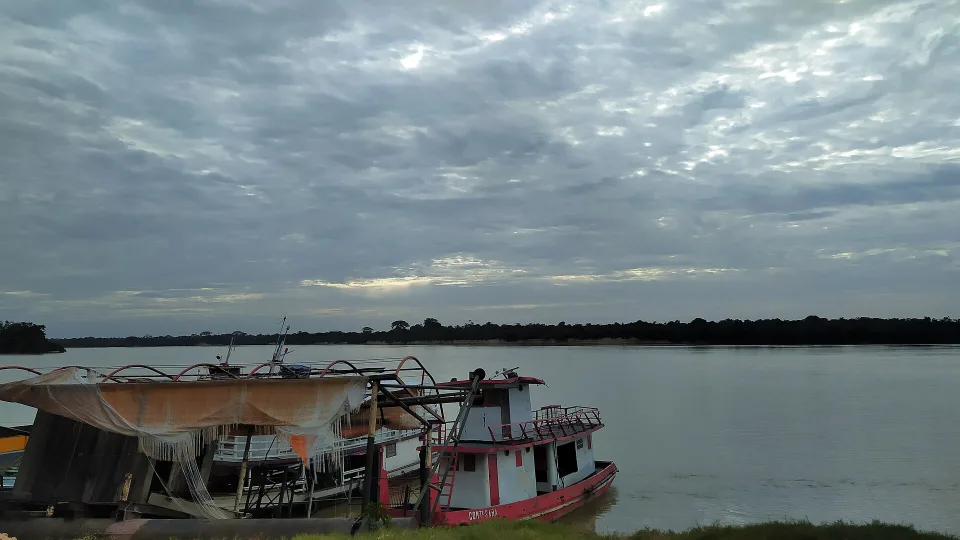
Rio Branco at Caracaraí in Roraima
1.47°N · 61.03°W Wildlife
Photo: Túllio F · CC BY-SA 4.0

Why this place

Viruá & Caracaraí

Viruá National Park protects an unusually varied mosaic of campinarana, terra-firme forest, wetlands, rivers and low mountains south of Boa Vista. Caracaraí is the practical gateway. The park is particularly strong for birdwatching and wildlife observation, with research trails, river excursions and seasonal landscapes that change dramatically between flood and dry periods.

Viruá is one of the Amazon’s less familiar nature destinations, best suited to travellers who care about habitats as much as postcard views. In southern Roraima, its mosaic of flooded forest, rivers and white-sand campinarana supports a remarkable variety of birds and other wildlife. Caracaraí is a practical overnight base, not a little village at the trailhead: ICMBio places the park access on BR-174 around 190 km south of Boa Vista and roughly 52 km from Caracaraí, followed by a dirt-road approach to the headquarters. Arrange a vehicle before booking accommodation and never assume there is regular public transport inside the park.

The reason to spend time here is that Viruá offers very different levels of nature access. The approximately 230-metre Passarela da Samaúma makes a short, adapted forest experience possible for some people with reduced mobility, while PPBio routes can mean several kilometres of difficult, wet-ground walking. Campinaranas do Megaleque reveal another habitat along the Estrada Perdida; river routes on the Baruana and Iruá have distinct access and boat rules. Some lagoon sectors restrict motors, and not every trail stays open in seasonal floods. This is a place to ask which route is safe and authorised today rather than arrive with an inflexible species checklist.
At a glance

Brasilll scorecard

The same 0–10 scale is used across the catalogue, so strengths and compromises stay comparable.

These are editorial fit ratings, not visitor-review averages or safety guarantees. A high score describes a strength for a particular kind of trip. How to read these scores →

Culture5/10
Food5/10
History4/10
Nightlife1/10
Beach2/10
Nature10/10
Wildlife10/10
Adventure8/10
Local feel9/10
Photography10/10
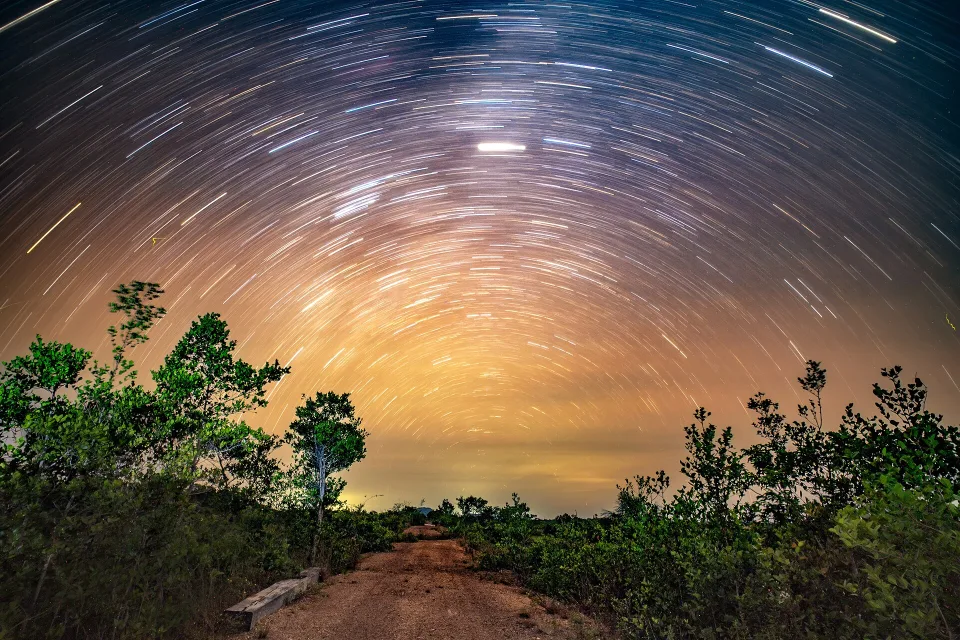
Long-exposure photograph of circular star trails over white-sand vegetation and a track in Viruá National Park, Roraima
Photo: André Inidio da Silva / Wikimedia Commons · CC BY-SA 4.0 · Cropped for layout

Where the campinarana meets the night sky

Viruá after dark: a striking long-exposure photograph

This genuine 2025 image captures star trails above a sandy park track and open vegetation in Viruá National Park. The arcs are created by a long photographic exposure, not a sky pattern you see with the naked eye. Although the park has a designated camping area, the photograph does not mean visitors can freely enter at night: confirm advance authorisation, approved overnight areas and any guide arrangements with ICMBio. The same white-sand campinarana that makes this view distinctive also supports specialist daytime birdwatching.

Compare Caracaraí, the boardwalk and the campinarana

Where to stay

Four distinct Viruá outings: forest boardwalk, white-sand campinarana, longer trails and rivers

Separate Caracaraí's road-and-lodging logistics from Samaúma's short boardwalk, the campinarana and longer PPBio routes, and the differently regulated Baruana/Iruá river outings. The park's habitat variety is real, but these experiences do not share one difficulty level or access rule.

Caracaraí and the BR-174 / Estrada Perdida turn — access rather than a park village

ICMBio places the park entrance on BR-174 at km 322, roughly 190 km south of Boa Vista, followed by about 7 km of dirt road to headquarters. Caracaraí is around 52 km from the entrance and has lodging; there is no regular public bus into the park. Confirm transport and road conditions before reserving a city hotel.

Passarela da Samaúma — 230 metres of shorter, accessible forest interpretation

The official park guide describes a 230 m raised boardwalk in flood-prone forest, designed for visitors with reduced mobility and typically walked in about 15 minutes. This one adapted feature does not make the whole national park wheelchair accessible; confirm the current boardwalk condition before travel.

Campinaranas do Megaleque and PPBio trails — very different walking commitments

ICMBio points to campinarana landscapes along Estrada Perdida and a twelve-trail PPBio grid with up to 60 km of research-related paths. Some day routes are 3–12 km with moderate-to-difficult terrain. A birder's gentle drive and an exposed forest hike are not the same activity.

Rio Baruana and Rio Iruá — separate boat and habitat decisions

The Baruana river is in the surrounding region, with a departure near its bridge; Iruá lies within the park and has restrictions on motorboats and particular lagoons. Some sectors permit guided motorboat excursions, while Lago da Baixa Verde restricts vessels to paddle or electric power. Arrange the exact authorised operator and route.

Travel smarter

Three checks before Viruá wildlife travel

A few practical decisions before departure can save time and make the experience easier on the ground.

01

Is Viruá free entry with no booking?

Admission is free, but ICMBio requests a visit booking at least four working days in advance and issues an authorisation for presentation on arrival. An old opening-hour screenshot does not replace that permit.

02

Does a 230 m accessible boardwalk mean the entire park is easy?

No. The Samaúma boardwalk was designed for people with limited mobility, but PPBio trails vary from moderate to difficult. Check flood levels, surface condition and whether the requested route is currently open.

03

Are all river boats and wild animal encounters guaranteed?

No. River sectors have different vessel restrictions, and wildlife appears on its own schedule. Confirm a licensed guide, permitted itinerary and life jackets; use river-bathing safety rules because stingrays and other animals occur.

Weather & timing

When to go

Season matters. These monthly scores combine our current baseline for climate, access and overall travel fit.

Monthly ratings are broad planning guidance, not a weather forecast or confirmation that every activity is operating.

Jan9/10
Feb9/10
Mar8/10
Apr7/10
May6/10
Jun6/10
Jul7/10
Aug8/10
Sep9/10
Oct9/10
Nov9/10
Dec9/10

Build your route

Three days for committed birders without promising animal sightings

Start by obtaining the written ICMBio authorisation at least four working days before arrival. Use a first day to reach Caracaraí, a second for the boardwalk and quieter campinarana birding, and a third for a preapproved longer trail or river option. Stay longer for more chances to observe wildlife without rushing.

Day 1

Reach Caracaraí and confirm the written ICMBio authorisation

ICMBio requires advance contact at least four working days before visiting, with written permission to show at headquarters. Confirm the permit, check access by BR-174 and choose a Caracaraí room or the designated park camping area.

Day 2

Mix a shorter Samaúma walk with campinarana birdwatching

Start in cooler hours with the short boardwalk, then use designated park roads or a confirmed guide to observe the white-sand campinarana. Bring binoculars and water, stay on marked routes, and never promise sightings of jaguars or rare birds.

Day 3

Choose a PPBio trail or prearranged river excursion

For a walking day, ask which PPBio route is currently open and appropriate to fitness and flood level. Alternatively book an authorised Baruana/Iruá boat route with life jackets, clear embarkation details and time to return to Caracaraí.

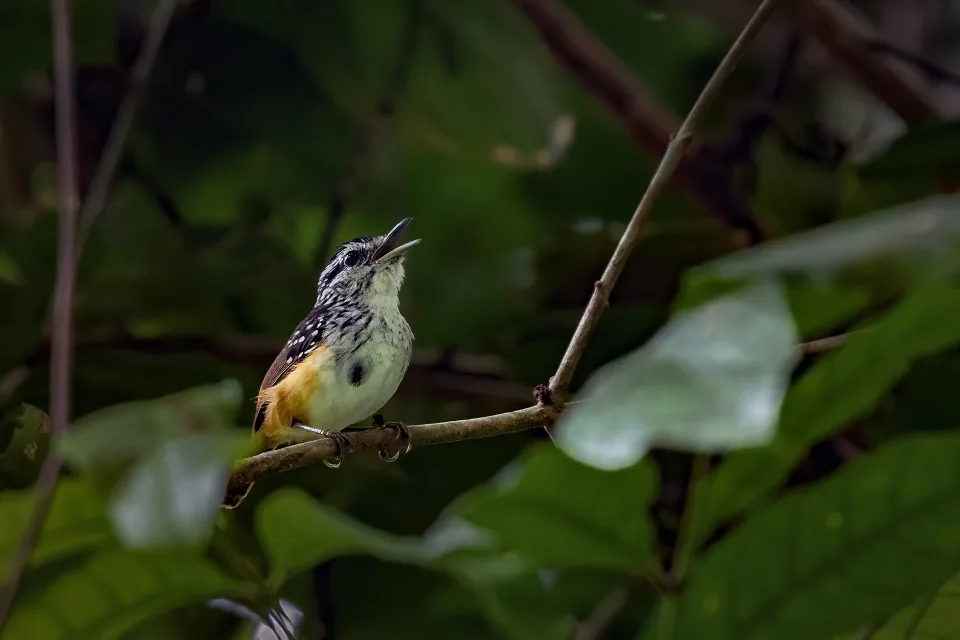
Original close-up photograph of a small singing forest bird on a branch in Viruá National Park, Roraima
Photo: André Inidio da Silva / Wikimedia Commons · CC BY-SA 4.0 · Cropped for layout

The reward for a patient morning

Birding in Viruá: listen first, then look carefully

This original photograph, taken in the park in October 2025, shows a small bird singing from a forest perch. It captures what makes Viruá special to birdwatchers: time spent noticing individual species rather than racing through a conventional sightseeing checklist. A short 230-metre Samaúma boardwalk suits some visitors, but the PPBio forest trails are longer and can be difficult in wet conditions. Bring binoculars, arrange the approved route ahead of time and remember that sightings—even of birds pictured here—are never guaranteed.

Follow the three-day birdwatching itinerary

Travel styles

Who does it suit?

These comparative scores show who is likely to enjoy this destination most—and where expectations may need adjusting.

Repeat Brazil travellers10/10
Slow travel9/10
Active travellers9/10
Couples8/10
Friends8/10
Backpackers7/10
Families with teenagers7/10
Solo7/10

Brasilll

How long should you stay?

We recommend 4–6 nights as a starting point. Include the arrival and departure journeys in your plan, then adjust the stay around the local outings you choose.

Allow four to six nights if you want wildlife rather than a single quick photograph. You can spend an arrival night in Caracaraí, then organise multiple mornings for birding and a short boardwalk outing, adding a PPBio walk or approved boat trip only when conditions suit. The three-day itinerary below is a minimum structure, not a guarantee of seeing rare species in 72 hours. Give your schedule enough flexibility for rainfall, river levels and the much slower pace that successful nature observation requires.

Most importantly, request the ICMBio visit authorisation at least four working days in advance: admission is free, but the official guidance requires prior contact and a document to present at the park. Confirm the permitted route, actual headquarters opening, whether your guide and vehicle are necessary, and any approved camping arrangements. Bring binoculars, covered shoes with grip, water, protection from sun and insects, and a waterproof bag for optics. A star-trail photograph from Viruá is not a promise of freely accessible night photography: sleeping and after-dark movement should be explicitly authorised. Avoid feeding wildlife or entering flooded routes without park approval.

Found an outdated price, route or detail? Send the page URL, the information that needs changing and a supporting source if available.

Report an error →

Does this sound like your Brazil?

Use Find Your Brasil to compare this destination with the rest of the country using your own priorities.

Plan Brazil

Getting there & moving on

Use these rounded door-to-door estimates to judge the travel day. Confirm the actual service and departure time before booking.

Arrival base

Caracaraí

Typical access Road

Caracaraí is a useful lodging reference, but the park entrance and headquarters require a separate journey. Confirm your access point and transport with the park before travelling.

Good onward connections

These are selected options for your next stop. Confirm operating days, connections and total travel time for your dates.