
First decide what you mean by “the Amazon”
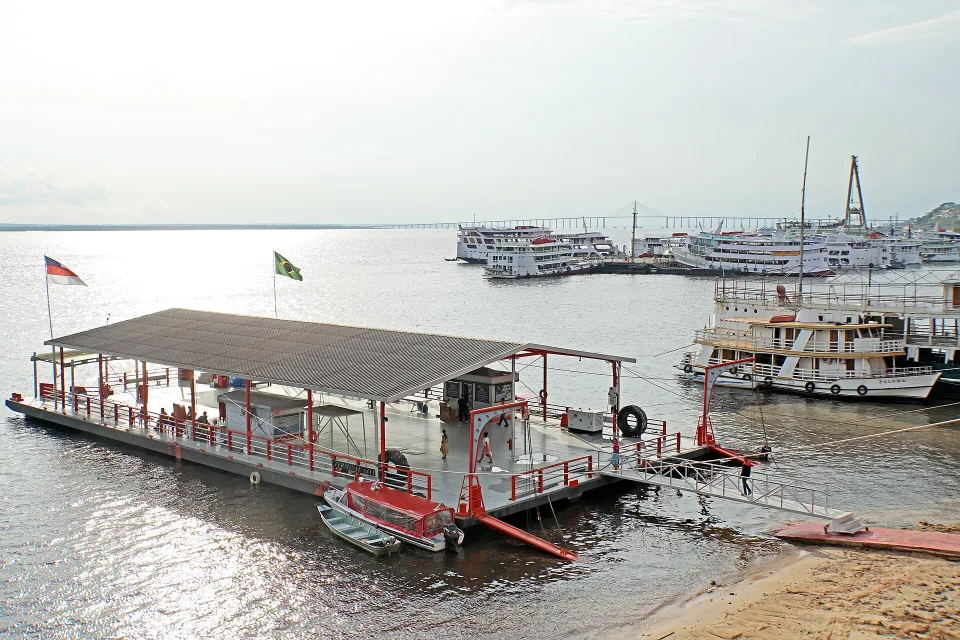
The Amazon biome covers an enormous area and crosses state and national borders. For many international first-time visitors, the practical Brazilian gateway is Manaus, capital of Amazonas state. Manaus has a major airport, hotels and city attractions, then connects to the Rio Negro, nearby protected areas, river communities and jungle lodges.
That does not mean Manaus is the only Amazon option. Belém and Alter do Chão offer a different relationship with the Amazon region; cruises and expeditions go much farther; and specialist wildlife or community trips may start elsewhere. This guide focuses on the classic Manaus-based first trip because it is the easiest structure to combine with the rest of Brazil.
Amazonastur and Visit Brasil both describe Manaus as a principal gateway to the forest. The city itself deserves at least a little time: Teatro Amazonas, Mercado Adolpho Lisboa, local food and the waterfront give context before you leave urban Brazil behind.
Ask exactly where the lodge is, how long the transfer takes, what activities are included, whether guides are local, and what the realistic wildlife expectations are. Distance from Manaus often matters more than the word “jungle” in the property name.
How many days: one night is rushed; three or four nights changes the experience
A day tour from Manaus can include the Meeting of the Waters and other river stops, but it should not be confused with staying in the forest. The Amazon reveals itself through repetition: dawn sounds, afternoon storms, night insects, river movement and multiple wildlife attempts.
For a first visit, three nights at a lodge is a strong minimum. Four nights gives more breathing room. Add one or two nights in Manaus around the lodge stay if flight times require it or if you want city context.
On a 10- or 14-day Brazil itinerary, the Amazon usually works best as one substantial region rather than a two-night detour squeezed between Rio and Salvador. Our Brazil itineraries guide explains why too many domestic flights can reduce the quality of a short trip.
High water, lower water and rain: choose by experience, not by a simple dry/wet label
Near Manaus, river levels rise and fall dramatically through the year. High-water periods can flood forest areas and make canoe access through igapó landscapes possible. Lower water can expose beaches and change fishing, walking and wildlife patterns. Exact timing varies from year to year.
Rain is possible in every month because this is tropical rainforest. A “drier” period does not mean dry weather, and a wet period does not mean constant rain. Short, intense downpours are part of the environment.
Instead of asking only “what is the best month?”, ask the lodge what its normal activities look like in your travel month. Our best time to visit Brazil guide gives the broader national season picture.
Flooded-forest access
Boat and canoe routes can reach areas that are inaccessible later; landscapes feel intensely aquatic.
Beaches and more exposed land
Some river beaches appear and walking routes can change. Heat may feel stronger and water access differs.
Humidity, insects and rain
Do not pack as if a “dry season” turns the rainforest into a dry climate.
Jungle lodge, riverboat or community stay: the format matters
Jungle lodges are the easiest first-time format. They bundle transfers, meals, guides and activities, which reduces logistics. The trade-off is that quality and ecological depth vary enormously.
Riverboat trips move through the landscape and can reach farther areas, but comfort ranges from simple hammocks to expedition-style cabins. Check boat safety, guide credentials, group size and exactly what is included.
Community-based tourism can offer a much stronger local relationship when it is genuinely community-led. The key word is led: residents should shape the visit, set rules and receive clear economic benefit rather than simply being displayed as part of someone else’s package.
For specialist guides and operators, check credentials and reputation. Our tours in Brazil guide explains Cadastur and why a legitimate local guide can materially improve nature travel.
Wildlife expectations: the Amazon is not an open-air zoo
The forest is biodiverse, but dense vegetation makes wildlife harder to see than in open ecosystems such as the Pantanal. Birds, monkeys, insects, river dolphins and caimans may be possible depending on location and season, yet no ethical operator can guarantee a jaguar, sloth or specific species on demand.
A good guide changes the experience by noticing tracks, calls, plant relationships and small details you would miss alone. Amazon travel is as much about ecology, river systems, forest structure and sound as about ticking animals off a list.
Be cautious with experiences that rely on handling wild animals, staged feeding or guaranteed close contact. A photograph with an animal is not evidence of responsible tourism.
Health: yellow fever, mosquitoes and preparation before you fly
Brazil’s Ministry of Health recommends that international travellers arrive with routine vaccinations updated and specifically recommends yellow-fever vaccination for travellers to areas where vaccination is advised. The vaccine should be taken at least 10 days before travel when it is the first dose, so this is not something to leave until Manaus airport.
The Ministry also recommends mosquito-bite protection: suitable repellent, long trousers, long sleeves and other barriers. Yellow fever is only one mosquito-borne risk; your personal medical advice should reflect route, season, age and health history.
Consult a travel-health professional before departure if your situation requires it. The Ministry of Health suggests planning health advice weeks ahead, not after symptoms appear.
Pack prescription medicine in sufficient quantity and keep essential medicine in hand luggage. Our Brazil packing guide has a dedicated Amazon/Pantanal list.
What to pack for a lodge: protect yourself without overpacking
Lightweight long trousers and long-sleeved shirts are more useful than a suitcase full of shorts. Bring closed shoes you have already worn, insect repellent, sun protection, a light rain layer and a dry pouch for electronics.
Ask the lodge what it provides. Some supply rubber boots, ponchos, water refills, binoculars or specialist equipment. Buying heavy gear before you know the lodge setup can create unnecessary luggage on domestic flights.
Humidity is hard on electronics. Keep spare batteries, camera equipment and documents protected, and expect clothes to dry more slowly than they would in an air-conditioned city hotel.
- Breathable long trousers and long-sleeved shirts.
- Closed walking shoes and useful socks.
- Repellent appropriate for the traveller and used according to label instructions.
- Hat, sunscreen and reusable water bottle if the lodge supports refills.
- Light rain shell or poncho.
- Dry bag or waterproof pouch for phone, documents and camera.
- Small torch or headlamp if recommended by the lodge.
- Essential medication plus prescription documentation where relevant.
Transfers and connectivity: the journey out of Manaus is part of the logistics
Many lodges require a combination of road and boat transfer. A property that looks close on a map can still take hours because river routes and departure times matter. Ask whether transfers are private or shared, what happens after a late flight and whether an overnight in Manaus is recommended.
Mobile coverage becomes unreliable quickly away from urban areas and highways. Treat lodge Wi-Fi as a bonus, not infrastructure. Download tickets, insurance, maps and key contacts before departure. Our SIM and internet guide explains why no mobile plan can solve a place with no network.
For domestic flights, Manaus is well connected to major hubs but not necessarily directly to every destination. Check the flying in Brazil guide before building tight same-day connections around a lodge transfer.
Responsible Amazon travel: look at who benefits and how wildlife is treated
A responsible trip should leave more than a payment at a distant booking platform. Ask whether guides and staff are local, whether community visits are genuinely arranged with those communities, and how the operator handles waste, water, wildlife and fuel.
Avoid souvenirs made from wildlife or protected natural materials and do not remove plants, seeds or animals. Follow rules in protected areas and instructions from local guides.
The Amazon is a living region, not an empty wilderness. Millions of people live in Amazonian cities and communities. Treating local residents as part of the landscape rather than as hosts, workers, experts and citizens misses the point of the trip.
Brazilian Amazon travel FAQ
How many days do I need in the Amazon?
For a first Manaus-based trip, three or four nights in a lodge plus one or two nights in Manaus is a strong structure. A single day tour shows only a small part of the experience.
What is the best time to visit the Amazon?
There is no single best month. Higher and lower water create different access and landscapes, and rain is possible year-round. Choose based on the activities and scenery you want.
Do I need a yellow-fever vaccine for the Amazon?
Brazil’s Ministry of Health recommends yellow-fever vaccination for travellers to recommended areas and says a first dose should be taken at least 10 days before travel to provide protection. Seek individual medical advice if needed.
Will I see lots of wildlife?
You may see a wide variety, but dense rainforest makes large animals difficult to spot. Ethical operators should not guarantee specific wild species.
Can I do the Amazon as a day trip from Manaus?
You can do river excursions, including the Meeting of the Waters, but a day trip is not the same as spending several nights in the forest or on the river.
Official Amazon and health references
River conditions and lodge operations vary locally, but these official Brazilian sources are solid starting points for Manaus, health and tourism planning.
- Visit Brasil — Manaus — Official tourism overview of Manaus as an Amazon gateway.
- Amazonastur — Manaus — Amazonas state tourism information.
- Manaus tourism — what to see and do — Municipal information on city and river attractions.
- Brazil Ministry of Health — traveller vaccination — Vaccination recommendations for international visitors.
- Brazil Ministry of Health — yellow fever for travellers — Yellow-fever timing and personal protection guidance.
Found an outdated price, route or detail? Send the page URL, the information that needs changing and a supporting source if available.
Report an error →