
First: Carnival is many festivals at once
Carnival sits in the Brazilian calendar before Lent, but the useful travel question is not simply “when is Carnival?” It is “which Carnival do I want?” The official Visit Brasil guide highlights the contrast: Rio and São Paulo are associated with major samba-school parades; Salvador is famous for axé and trios elétricos; Recife and Olinda are strongly identified with frevo and maracatu.
That difference changes almost everything: whether you buy a ticket or simply walk into the street, whether you watch a choreographed spectacle or move with a crowd, whether the soundtrack is samba-enredo, axé or frevo, and how much advance planning makes sense.
Rio’s Special Group parades are scheduled for 7, 8 and 9 February 2027. The Champions Parade is scheduled for 13 February. If the Sambadrome is your priority, use LIESA as the authoritative source for dates and ticket releases.
Rio de Janeiro: the grand spectacle plus the street
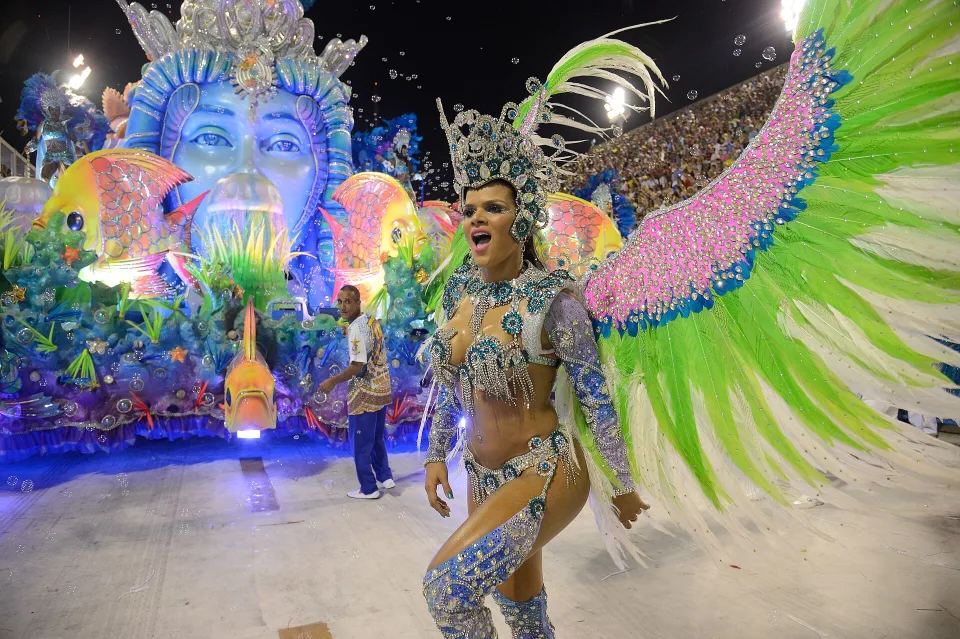
Rio offers two Carnivals at the same time. The most internationally famous is the parade competition at the Sambódromo da Marquês de Sapucaí, where samba schools present enormous productions built around music, percussion, costumes, floats and a complete annual theme. This is a ticketed event and can run deep into the night.
Outside the Sambadrome, the city has a vast street-carnival culture of blocos. Some are neighborhood gatherings; others attract very large crowds. For many visitors, combining one Sambadrome night with one or two carefully chosen street days gives a better picture than treating Carnival only as a stadium-style show.
Big spectacle
Choose Rio if seeing the Special Group samba schools is one of the reasons you are travelling to Brazil.
Explore Rio de Janeiro →Late nights
Sambadrome nights are long. Do not plan a full sightseeing morning immediately after if you want to enjoy both.
Salvador: music moving through the streets
Salvador’s Carnival has a different physical logic. The iconic image is the trio elétrico: a large sound truck with performers moving along a circuit while crowds follow. Axé, samba-reggae and other Bahian sounds turn the street itself into the venue.
There are paid structures and controlled areas as well as free public experiences, so “Salvador Carnival” is not one ticket product. The atmosphere can be extremely intense and crowded. It suits travellers who want to be inside the movement rather than sit and watch from a fixed seat.
Street energy
Choose Salvador if live music, Afro-Brazilian culture and being carried along by a huge street celebration appeal more than a seated parade.
Explore Salvador →Your crowd tolerance
The most famous circuits can be packed. Know where you are meeting people, carry very little and decide in advance how much intensity you actually want.
Recife & Olinda: frevo, maracatu and historic streets
Recife and neighboring Olinda create one of the strongest alternatives to the Rio image of Carnival. Frevo — fast, brass-driven and physically expressive — is a defining sound, while maracatu brings its own percussion, processions and Afro-Brazilian traditions. In Olinda, the colonial streets, hills and giant puppets become part of the visual identity of the festival.
Much of the experience happens in public space rather than behind one headline ticket. That makes it feel spontaneous, but it does not mean it requires no planning: accommodation in the most convenient areas becomes scarce and moving through the historic center can be slow when the streets fill.
Culture in the street
Choose Recife and Olinda if historic surroundings, frevo, maracatu and moving between many public celebrations sound better than one giant parade venue.
Explore Recife & Olinda →Heat and hills
Olinda is beautiful and steep. Light clothes, water, sun protection and shoes you can walk in matter more than an elaborate outfit.
São Paulo: major samba with a city break around it
São Paulo also has an important samba-school competition and a large street Carnival. It is often overlooked by international visitors who automatically associate Carnival with Rio, which can make it an interesting option if you already want the food, museums and urban energy of São Paulo around the festival.
The city is huge, so neighborhood and transport choices matter. A bloco in one part of São Paulo and dinner across town can be a much bigger logistical jump than a map makes it look.
Carnival + metropolis
A strong choice if Carnival is important but you also want a full São Paulo city trip.
Explore São Paulo →Distances
Stay near the part of the city you expect to use most. Carnival traffic controls can make normal journey times unreliable.
Tickets, blocos and when to book
The word “Carnival” hides very different access models. Rio’s headline Sambadrome parade is ticketed. Many street blocos around Brazil are free. Salvador includes free street celebration as well as paid options. Do not buy a generic “Carnival ticket” from the first reseller you find; identify the exact event first and use the official organizer whenever possible.
For a trip built around Carnival, accommodation is often the first thing to secure once dates are clear. Flexible or refundable rates are useful while you are still deciding which nights and neighborhoods matter. Flights can also become expensive around the main holiday period.
- Rio Sambadrome: follow LIESA for official parade dates and ticket sales.
- Street blocos: schedules can change and routes can be confirmed relatively late; recheck shortly before each day.
- Accommodation: prioritize a location with realistic transport options, not simply the cheapest room on the city map.
- Do not over-schedule: Carnival days are long, hot and unpredictable. One major plan per day is often enough.
Practical Carnival safety without ruining the fun
Carnival concentrates people, phones, alcohol, heat and disrupted transport into the same places. The useful response is not fear; it is reducing what can go wrong. Carry the minimum, keep your phone physically secure, avoid displaying jewelry, know how you are getting back before you are tired and keep your group’s meeting point simple.
Hydration and sun protection matter as much as theft prevention. Recife, Salvador and Rio can be very hot at street level. Pace alcohol, drink water and do not underestimate how much energy a full afternoon in a bloco takes.
Take only what you are prepared to carry close to your body for hours: one phone, one payment method, a little cash if useful, identification as appropriate, and nothing sentimental.
Which Carnival should you choose?
Choose Rio for the most famous samba-school spectacle and the widest mix of ticketed parade plus blocos. Choose Salvador if following live music through the streets sounds more exciting than watching from a seat. Choose Recife and Olinda if frevo, maracatu and historic public space are the attraction. Choose São Paulo if you want a huge city trip with serious Carnival built into it.
If this is your first Brazil trip and Carnival is only one part of it, do not try to sample three cities in the same week. Pick one Carnival personality and give yourself enough time on either side to experience the destination when it is not operating at festival intensity.
Brazil Carnival FAQ
When is Carnival in Brazil in 2027?
The main Carnival period falls in early February 2027. Rio’s Special Group samba-school parades are scheduled for 7, 8 and 9 February, with the Champions Parade on 13 February. Other cities publish their detailed street schedules separately.
Is Carnival in Brazil free?
Many street blocos are free, but headline venues and some controlled experiences are ticketed. Rio’s Sambadrome Special Group parade requires a ticket. Salvador combines free and paid forms of participation.
Is Rio the best Carnival for a first-time visitor?
It is the easiest famous reference, but not automatically the best fit. Rio is ideal for samba-school spectacle; Salvador emphasizes street music and trios elétricos; Recife and Olinda emphasize frevo, maracatu and historic streets.
How far ahead should I book Carnival?
If Carnival is the main purpose of your trip, reserve accommodation as soon as your city and dates are decided. Official event tickets follow their own release calendars; street schedules are often confirmed closer to the festival.
Current sources & official calendars
Carnival schedules change every year. Recheck official organizers immediately before your trip.
- Visit Brasil — Carnival — Official national overview of Carnival styles and destinations.
- LIESA — Rio Carnaval — Official Rio Special Group dates, parade information and ticket updates.
- Agência Brasil — Rio Carnaval 2027 tickets and dates — Published 10 August 2026; confirms 7–9 February and Champions Parade on 13 February.
Found an outdated price, route or detail? Send the page URL, the information that needs changing and a supporting source if available.
Report an error →