5 nights · default stay

Brazil · Beach · Marine nature · Ecotourism

Praia do Forte

Praia do Forte blends a walkable Bahian village, reef-fringed beaches and a genuine conservation story. Plan the natural pools around the tide rather than a fixed lunch hour, visit Projeto Tamar to learn about sea turtles and leave space for the restaurants and small streets behind the seafront. Your hotel choice matters: a village pousada and a larger coastal resort create very different days.

Recommended stay4–5 nights
Ease of travel9/10
First Brazil trip9/10
Infrastructure9/10
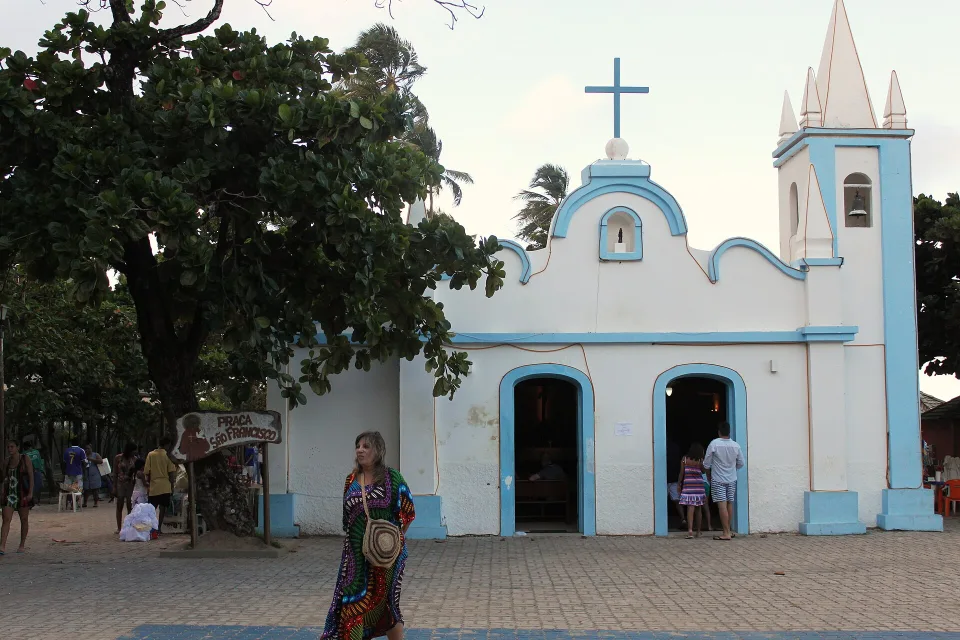
Travel photograph of Praia do Forte on the Bahia coast
12.57°S · 38.00°W Beach
Photo: Ben Tavener · CC BY 2.0

Why this place

Praia do Forte

Praia do Forte blends a walkable former fishing village with reefs, calm-water beaches, the Tamar sea-turtle project, nearby nature reserves and a broad range of pousadas and resorts.

The coastline changes dramatically between high and low tide. Rocky reef sections can reveal natural pools when the water recedes, but exposed coral, currents and waves still require caution. Ask which access points are permitted and suitable that day, particularly with children, and never step on living coral or disturb marine animals.

Praia do Forte is both a beach destination and a gateway to wildlife education. The Projeto Tamar visitor centre is a managed educational attraction, not a promise of hatchlings in the wild. Humpback-watching boats are a different, seasonal outing, while the Baleia Jubarte land-based centre can make sense when weather is poor or you prefer not to go out to sea.
The Brasilll take

Praia do Forte is one of Bahia’s easiest beach destinations because nature and comfort sit close together.

A walkable former fishing village, reef pools, Projeto Tamar, nearby reserves and a wide range of pousadas and resorts make the destination particularly strong for families and couples who want nature without complicated logistics.

What Praia do Forte does well

01

Marine nature is visible

Projeto Tamar gives sea-turtle conservation a physical presence in the village, while the wider coast also has seasonal humpback-whale interest.

02

Low tide creates another coastline

Reef pools and calmer swimming depend on tide. The same beach can feel quite different over the course of a day, so tide tables belong in the plan.

03

Comfort does not require isolation

Resorts exist, but the village remains walkable with restaurants and services. You can choose high comfort without being locked inside one property.

Before you book

Praia do Forte: tides, Tamar and whale season are three different plans

The reef changes with the tide, Projeto Tamar has its own visitor-centre entry, and whale boat trips are seasonal and separately operated.

01

Check Projeto Tamar's own booking and opening rules

The conservation centre at Praia do Forte sells entry for its educational exhibits. Consult Projeto Tamar's official page for current opening days, ticket conditions and closures; external sites can list conflicting hours. A visit does not include a nesting beach expedition or guarantee live turtle hatchlings.

02

Check actual low tide and beach safety before swimming

Natural reef pools are tide-dependent, and a low-tide forecast does not guarantee safe water. Check the day's local tide table, warnings, currents and safe entry points, especially with children. Avoid live coral, do not remove wildlife and use shore access permitted by local conservation rules.

03

Separate seasonal whale boats from learning on land

Instituto Baleia Jubarte has a visitor centre in Praia do Forte and lists its partner boat operators. July–October is the usual humpback season, but boat departure, sea conditions and sightings vary and cannot be guaranteed. Book an authorised trip for the season or use the land-based centre and Parque Klaus Peters instead.

At a glance

Brasilll scorecard

The same 0–10 scale is used across the catalogue, so strengths and compromises stay comparable.

These are editorial fit ratings, not visitor-review averages or safety guarantees. A high score describes a strength for a particular kind of trip. How to read these scores →

Culture7/10
Food9/10
History7/10
Nightlife5/10
Beach10/10
Nature9/10
Wildlife9/10
Adventure7/10
Local feel8/10
Photography9/10
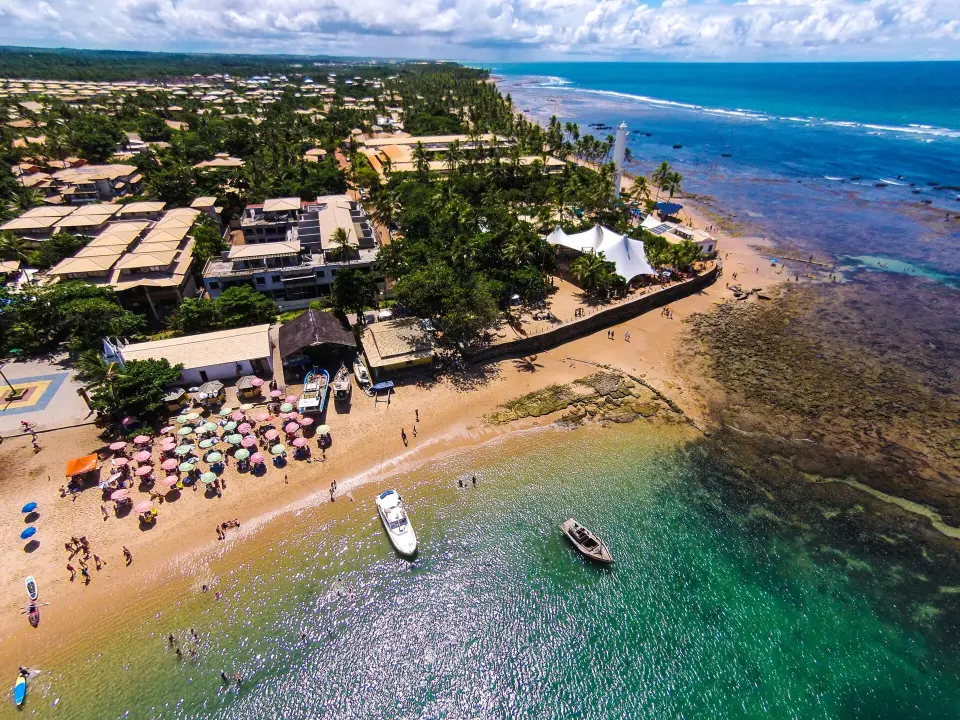
Real drone photograph of the coastline and reefs at Praia do Forte, Bahia, Brazil
Photo: Cleferson Comarela · CC BY-SA 3.0 · Cropped for layout

The beach changes with the tide

A coastline worth planning around

From above, Praia do Forte is a sweep of Atlantic water, reef and palm-fringed village. At low tide, parts of this landscape reveal sheltered pools; at other times, waves change what is accessible. Use the actual tide table and local safety advice rather than relying on a photo or a fixed daily schedule.

Choose your place to stay

Where to stay

Four parts of a Praia do Forte stay

Choose the pedestrian-friendly village centre for easy dinners and conservation visits, a resort area for hotel facilities, or the wider coastline when you prefer quieter beaches and accept more transport. Reef-pool locations are tide-dependent, not separate hotel districts.

Village centre

Best for walking to restaurants, shops, Tamar and beaches while keeping an independent feel.

Reef beaches

Use low tide for natural pools and easier swimming; conditions matter more than simply arriving at midday.

Resort zone

Useful for families or travellers prioritising facilities, pools and full-service comfort.

Wider north coast

Guarajuba, Imbassaí and neighbouring areas can add another coastal landscape if you have extra time or a car.

Travel smarter

Tide and season both matter

A few practical decisions before departure can save time and make the experience easier on the ground.

01

Check the tide before beach plans

Low tide can be the difference between reef pools and ordinary ocean water. Schedule the best coastal hours first.

02

Whale season is a bonus

Roughly July to October adds humpback-whale possibilities, but sightings and trips depend on conditions and should not be treated as guaranteed.

03

Choose village or resort deliberately

A central pousada and a large resort create different holidays. Decide whether evening independence or on-property facilities matter more.

Weather & timing

When to go

Season matters. These monthly scores combine our current baseline for climate, access and overall travel fit.

Monthly ratings are broad planning guidance, not a weather forecast or confirmation that every activity is operating.

Jan8/10
Feb8/10
Mar8/10
Apr8/10
May7/10
Jun7/10
Jul8/10
Aug9/10
Sep10/10
Oct10/10
Nov9/10
Dec9/10

Build your route

A strong first visit in four days

These four days work best when low-tide beach time, Projeto Tamar and a quieter nature day remain separate. Leave the whale-watching option flexible and check opening hours before scheduling an excursion.

Day 1

Village and Tamar

Arrive by road from Salvador and choose between a walkable village pousada and a resort with more facilities but a longer trip into the centre. Visit the Projeto Tamar centre only on an official opening day: its educational tanks and exhibits do not guarantee sightings of hatchlings on a nesting beach. Enjoy the village in the evening and check the tide table for the next morning.

Day 2

Reefs and slow beach time

Plan a reef-pool morning when low tide falls in daylight. Ask locally which stretches are open and safe; low tide does not remove currents, breaking waves or sharp reef surfaces, especially for children. Avoid standing on living coral and touching marine wildlife, then spend the afternoon in the village instead of racing between every pool.

Day 3

Nature beyond the village

Take a separate conservation day at Parque Klaus Peters, where the municipality describes restinga trails and selected guided programmes. Check booking conditions, heat and accessibility; forest excursions around Sapiranga are different activities. Families who prefer educational exhibits can visit the land-based Espaço Baleia Jubarte without buying a whale-watching boat tour.

Day 4

Resort or local rhythm

From roughly July to October, consider a responsible humpback-watching trip offered by an Instituto Baleia Jubarte partner. Ask about departure, safety briefing, weather cancellation and the lack of guaranteed sightings. Outside the whale season, choose Imbassaí or another nearby beach instead and keep transfer time back to Salvador flexible.

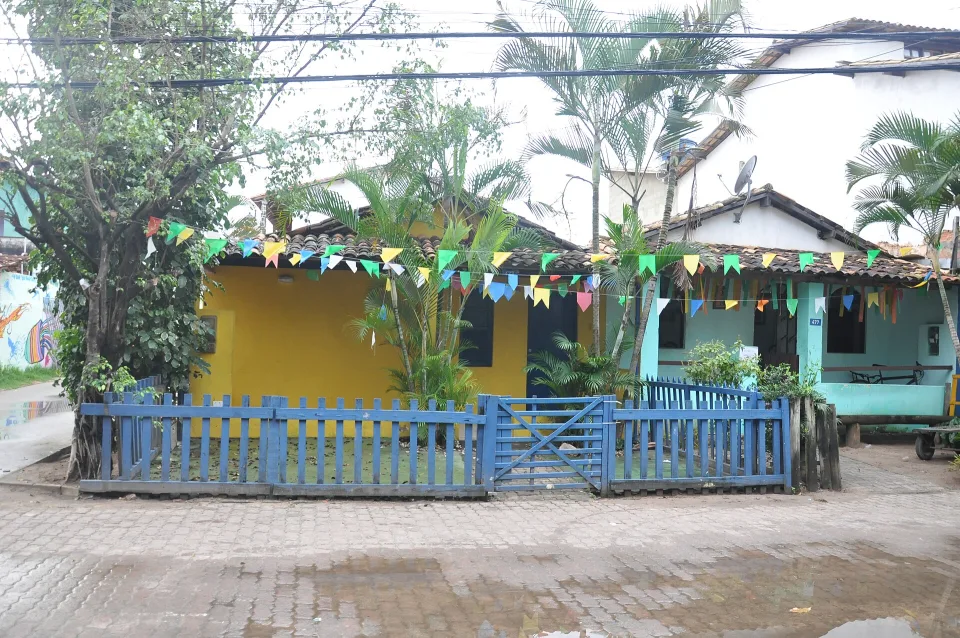
Original photograph of traditional houses on a village street in Praia do Forte, Bahia
Photo: Tereza Torres / Turismo Bahia · CC BY-SA 2.0 · Cropped for layout

Behind the beachfront

A village with more than resorts

The streets of Praia do Forte still tell a story beyond hotel pools and beachfront loungers. Walking between the village, its fishing heritage and the conservation centres can be as rewarding as another excursion. If you want that freedom after dinner, pick accommodation within a realistic walk of the centre.

Explore the four-day itinerary

Travel styles

Who does it suit?

These comparative scores show who is likely to enjoy this destination most—and where expectations may need adjusting.

Families with young children10/10
Luxury travellers10/10
Repeat Brazil travellers9/10
Couples9/10
First time in Brazil9/10
Families with teenagers9/10
Seniors9/10
Slow travel9/10

Brasilll

How long should you stay?

Four to five nights is ideal for a relaxed first stay. Three are enough to understand the place; five create room for tides, marine nature and one excursion without sacrificing beach time.

Four or five nights let you enjoy a relaxed village-and-beach stay without feeling obliged to book a different excursion each day. If you have three, prioritise the reef at a suitable tide and one conservation activity; add a longer north-coast trip only if you have more time.

Praia do Forte is reached by road from Salvador. Confirm whether your accommodation is walkable to the village, whether the quoted transfer reaches the exact property and how much time you need on the return journey. Boat departures, turtle-centre opening days and whale trips should be checked directly with their respective operators.

Found an outdated price, route or detail? Send the page URL, the information that needs changing and a supporting source if available.

Report an error →

Does this sound like your Brazil?

Use Find Your Brasil to compare this destination with the rest of the country using your own priorities.

Plan Brazil

Getting there & moving on

Use these rounded door-to-door estimates to judge the travel day. Confirm the actual service and departure time before booking.

Main planning gateway

Salvador

Typical access Road · Boat / ferry
Gateway transfer Road transfer · ~1 h 50 min Flexible timing · Short transfer block

Start by checking arrivals into Salvador, then confirm the onward transfer to this destination. Treat the road time as a planning estimate and leave some buffer for traffic, stops and local pickup arrangements.

Good onward connections

These are selected options for your next stop. Confirm operating days, connections and total travel time for your dates.