
The easiest strategy is a mix
Rio stretches between mountains, bays and beaches, so no single form of transport wins everywhere. The metro is usually the simplest backbone for a visitor, walking works well inside beach neighbourhoods and central areas, and taxis or ride-hailing apps are useful when geography, heat, luggage or late hours make public transport inconvenient.
The mistake is planning Rio as if every attraction sat on one compact grid. Corcovado, Sugarloaf, Ipanema, Centro and Galeão airport create very different journeys. Think in corridors rather than kilometres.
Rio postponed the end of cash payments on municipal buses from the originally announced 30 May date to 28 June 2026. This guide uses the later official date and should be reviewed frequently because fare and integration rules can change.
Metro: the best default for many visitor journeys
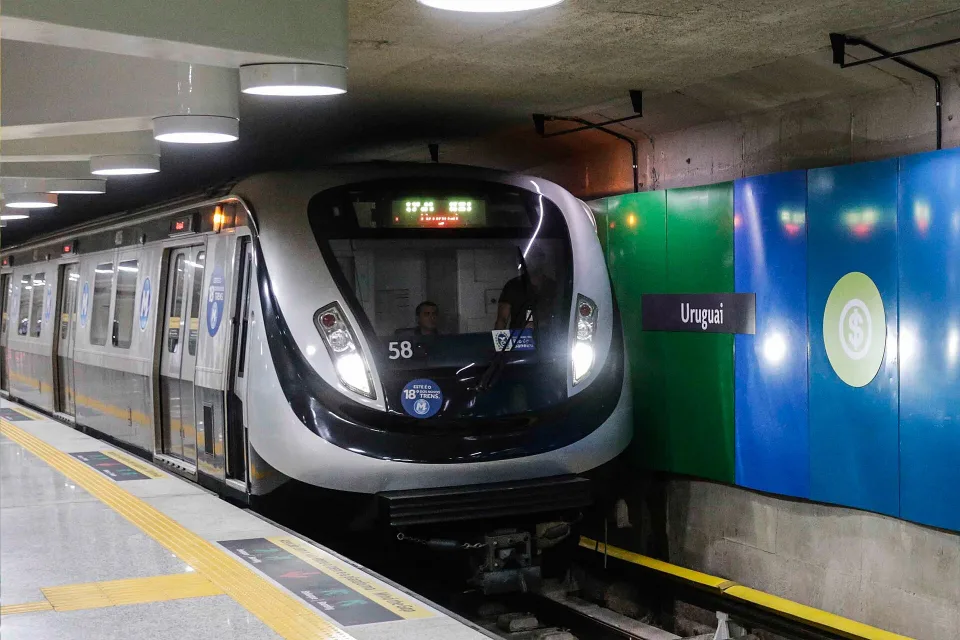
MetrôRio is usually the most predictable way to move between the South Zone, Centro and several major visitor areas. It avoids road congestion and is straightforward even if your Portuguese is limited. For Copacabana, Ipanema, Botafogo, Flamengo and central Rio, it often deserves to be your first option.
Do not judge a destination only by the nearest station. Some attractions still require a walk, bus, van, taxi or app ride after the metro. Use the train as the reliable middle of the journey rather than expecting door-to-door coverage.
As of this review, MetrôRio lists the public fare for Lines 1, 2 and 4 at R$7.90. Fares can change, so the official fare page below is the source to use before travel.
Municipal buses, BRT and Jaé
Buses cover far more of Rio than the metro, and BRT is important on corridors where rail does not reach. They can be excellent if you stay away from a metro station, but routes are less intuitive for a first-time visitor.
Since 28 June 2026, cash is no longer accepted on municipal buses. Jaé is central to the city system, while validators also support PIX and debit or credit card payments for single rides. Fare integrations have more specific rules, including use of the black Jaé card or QR Code for Bilhete Único Carioca integrations. Check City Hall’s latest guidance if you plan to rely on integrations.
Taxis, ride apps and walking
Taxis remain widely available and app-based rides are especially useful for airport transfers, evenings, luggage and places where the final public-transport connection is awkward. Confirm the vehicle and plate in the app and use official airport pickup arrangements.
Walking is excellent locally but poor as a citywide plan. The beach promenade makes Rio feel effortless, yet mountains, tunnels and heat interrupt direct routes. Walk within Ipanema, Leblon, Copacabana, Botafogo or compact parts of Centro, then use faster transport between areas.
How to think about the classic sights
For a first visit, staying near a metro station removes a surprising amount of friction. Use public transport for simple corridors and an app ride when the alternative requires multiple changes.
- Copacabana and Ipanema: metro plus walking is usually the cleanest combination.
- Christ the Redeemer / Corcovado: reach the departure area separately, then use the official mountain transport.
- Sugarloaf: public transport gets you close; the final approach is on foot or by road.
- Centro, Lapa and museums: metro and VLT can be useful depending on the exact stop.
- Galeão airport: allow time for road traffic and compare the current public option with taxi or app travel for your arrival hour.
Three routes visitors often underestimate
Use a station as an anchor, then check the final walking or vehicle leg. A place being in the same part of Rio does not mean the metro goes to its entrance.
Practical route choices in Rio
| Journey | Useful starting point | The detail to check |
|---|---|---|
| South-zone beaches | General Osório / Ipanema or a Copacabana station | Choose the station nearest your actual address; keep beach walks for suitable conditions. |
| Sugarloaf / Urca | Botafogo station, then an onward connection | Urca has no metro station. The cable-car entrance is on Avenida Pasteur; check the operator’s directions. |
| Corcovado train | Largo do Machado, then onward to Cosme Velho | The train departs from Rua Cosme Velho, 513. Check the ticket’s access method and arrival instructions. |
Swipe or scroll sideways to see every column.
Rio transport FAQ
Can I still pay cash on Rio municipal buses?
No. The final official cutoff was 28 June 2026. The city had initially announced 30 May, then postponed the cash ban.
What is the current Rio metro fare?
At this review, MetrôRio lists R$7.90 for Lines 1, 2 and 4. Check the official fare page before travel because fares can change.
Do tourists need a Jaé card?
Not necessarily for every single ride because contactless bank-card and PIX options have expanded. Jaé becomes more relevant if you depend on municipal fare integrations.
Sources & further reading
Transport is one of the more volatile guide topics, so these official pages should be checked again close to travel.
- MetrôRio — payment methods and fares — Official metro fares and payment methods.
- Rio City Hall — cash payment deadline moved to 28 June 2026 — Later official update superseding the original 30 May cash cutoff.
- Rio City Hall — Jaé, PIX and card payments — Official explanation of municipal bus payment options.
Found an outdated price, route or detail? Send the page URL, the information that needs changing and a supporting source if available.
Report an error →