
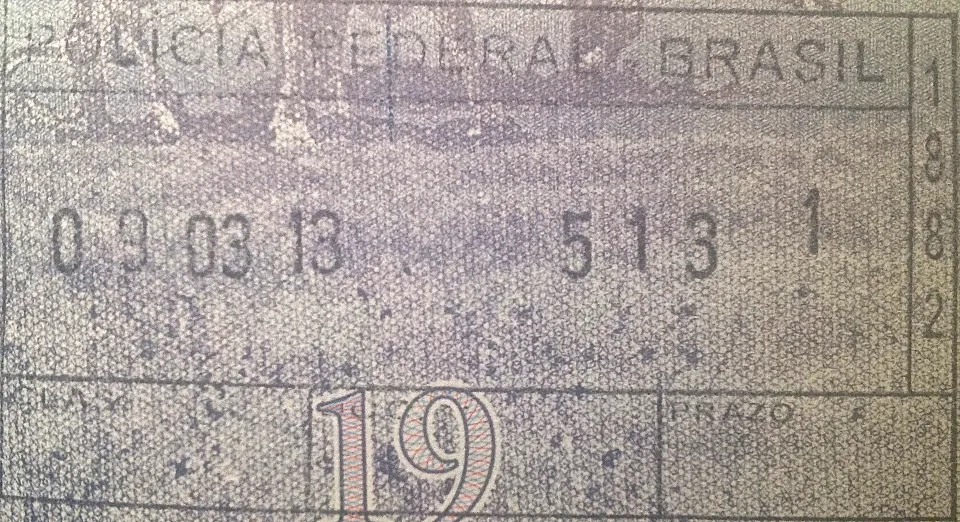
EU short stays: 90 days in any 180-day period
Brazil’s amended short-stay visa-waiver agreement with the European Union entered into force on 1 March 2026. The agreement now defines a short stay as a maximum of 90 days in any rolling 180-day period. That means the calculation looks back over the previous 180 days on each day of your stay rather than simply resetting at the start of a new six-month block.
For Spanish travellers, the Brazilian Consulate in Barcelona explicitly states that Spanish citizens do not need a tourism visa. German travellers benefit from visa-waiver arrangements for short visits as well. If you hold another nationality, do not assume that an EU residence permit gives you the same visa treatment as an EU passport: entry rules are based primarily on nationality and travel document.
The 90/180 rule described here applies to ordinary short visits under the relevant visa-waiver agreement. It does not replace rules for residence, employment, study that requires another status, or other long-term purposes.
Travel with a valid passport and check the details for your nationality
Brazil’s official visa service requires a valid travel document for visa applications and border entry remains subject to Brazilian immigration rules. For a visa-exempt tourism trip, travel with the passport that gives you the exemption and make sure it remains valid for your planned journey.
We deliberately do not give a universal “six months beyond travel” rule here because passport-validity details can vary by nationality, airline and specific travel situation. Check the Brazilian consular page for your passport country and the requirements of any countries you transit on the way.
- Use the same passport when a booking, entry authorization or visa waiver depends on that document.
- Check transit countries. A connection in another country can create separate document or transit-visa requirements.
- Keep a digital copy. It does not replace the passport, but it makes replacement and reporting easier if the original is lost.
Tourism and visitor activities are not the same as working in Brazil
Brazil’s visitor category covers tourism and several other temporary purposes, but the Brazilian Foreign Ministry states that holders of visitor status are prohibited from ordinary paid work in Brazil. If the purpose of your trip is employment or residence, you need to check the appropriate visa or residence route rather than relying on a tourist stay.
Business meetings, conferences and some other temporary activities can fall within visitor rules, but that is not a general permission to take a Brazilian job. When the trip involves paid professional activity, long study, residence or a move to Brazil, use the official immigration service for the specific category.
Vaccinations: no general proof required for entry, but recommendations matter
The Brazilian Ministry of Health currently states that there is no general requirement to present proof of vaccination to enter Brazil. It nevertheless recommends that international visitors update routine vaccinations before travel, including yellow fever, polio, measles and rubella, diphtheria and tetanus according to the traveller’s situation and home-country schedule.
For yellow fever, Brazil recommends vaccination for people travelling to areas where vaccination is advised, with the dose given at least 10 days before travel so protection has time to develop. Whether that vaccine is appropriate for you depends on your itinerary, age and medical situation; ask a travel-health professional where necessary.
Brazil may not require a vaccination certificate for your entry, but another country on your itinerary or transit route can have its own rules. Check every border you cross, not only the final destination.
Visa-free does not mean “no border conditions”
A visa exemption means you do not need to obtain that visa in advance for the covered short visit. It does not guarantee admission regardless of circumstances. Border authorities can still verify whether your trip fits the permitted purpose and whether you satisfy the applicable immigration conditions.
Keep your itinerary, accommodation details and onward or return plans accessible during the journey. Airlines can also perform document checks before boarding. If your personal situation is unusual — one-way travel, a very long stay, previous overstays or a mixed tourism/work purpose — get specific consular advice rather than relying on a general travel article.
Not travelling on an EU passport?
Brazil’s visa rules vary by nationality. Some non-EU European passport holders are visa-exempt; others may have different conditions. The correct starting point is Brazil’s official visa information and the Brazilian embassy or consulate responsible for your country or place of residence.
Do not use a friend’s nationality, EU residence status or a previous trip as the basis for your own entry decision. Check the passport you will actually present at the border.
Five checks to make just before you fly
Entry rules are one of the few parts of an otherwise evergreen travel guide that deserve a final recheck every time. A two-minute official-source check is worth doing even if you booked months earlier.
- 1. Confirm whether your passport nationality is visa-exempt for your exact purpose.
- 2. Count previous Brazilian stays if the 90-days-in-180 rule applies to you.
- 3. Confirm your passport and transit-document requirements.
- 4. Review health and yellow-fever recommendations for the regions on your itinerary.
- 5. Recheck the Brazilian government or your Brazilian consulate shortly before departure.
Brasilll last checked this page on 24 August 2026. We link the official sources below so you can verify the same rules at the moment you travel.
Brazil entry requirements FAQ
Do Spanish citizens need a visa for Brazil?
For short tourism visits, the Brazilian Consulate in Barcelona states that Spanish citizens do not need a tourism visa. Under the updated Brazil–EU short-stay agreement, the current limit is 90 days in any rolling 180-day period.
Do German citizens need a visa for a holiday in Brazil?
German citizens benefit from visa-free arrangements for short visits, subject to the applicable visitor rules and the 90-days-in-180 calculation under the current Brazil–EU agreement. Recheck the Brazilian Embassy in Germany before travel.
Can I work in Brazil while visiting as a tourist?
Ordinary paid employment is not permitted under visitor status. If you intend to work or live in Brazil, check the appropriate visa or residence authorization.
Do I need a yellow-fever certificate to enter Brazil?
Brazil’s Ministry of Health currently says there is no general vaccination-proof requirement for entry. Yellow-fever vaccination is recommended for travel to relevant areas, normally at least 10 days before travel. Other countries on your route may have separate certificate requirements.
How does the 90/180 rule work?
For each day in Brazil, look back at the previous 180 days. Your total presence under the agreement must not exceed 90 days in that rolling period.
Official sources — check these before departure
This page summarizes the rules for trip planning; the government and consular sources below remain authoritative.
- Brazil Presidency — Decree 12.864/2026 — Promulgates the amended Brazil–EU short-stay agreement; effective 1 March 2026 and establishes 90 days in a rolling 180-day period.
- Brazil Government — Visa service — Official starting point for Brazilian visa information.
- Brazilian Consulate in Barcelona — VIVIS — Current guidance for travellers in Spain; explicitly notes visa-free tourism for Spanish citizens.
- Brazilian Embassy in Berlin — VIVIS — Visitor-visa guidance and permitted visitor activities for Germany.
- Brazil Ministry of Health — Vaccination for Travellers — Current vaccination and yellow-fever recommendations.
Found an outdated price, route or detail? Send the page URL, the information that needs changing and a supporting source if available.
Report an error →